Back to Glen Cove
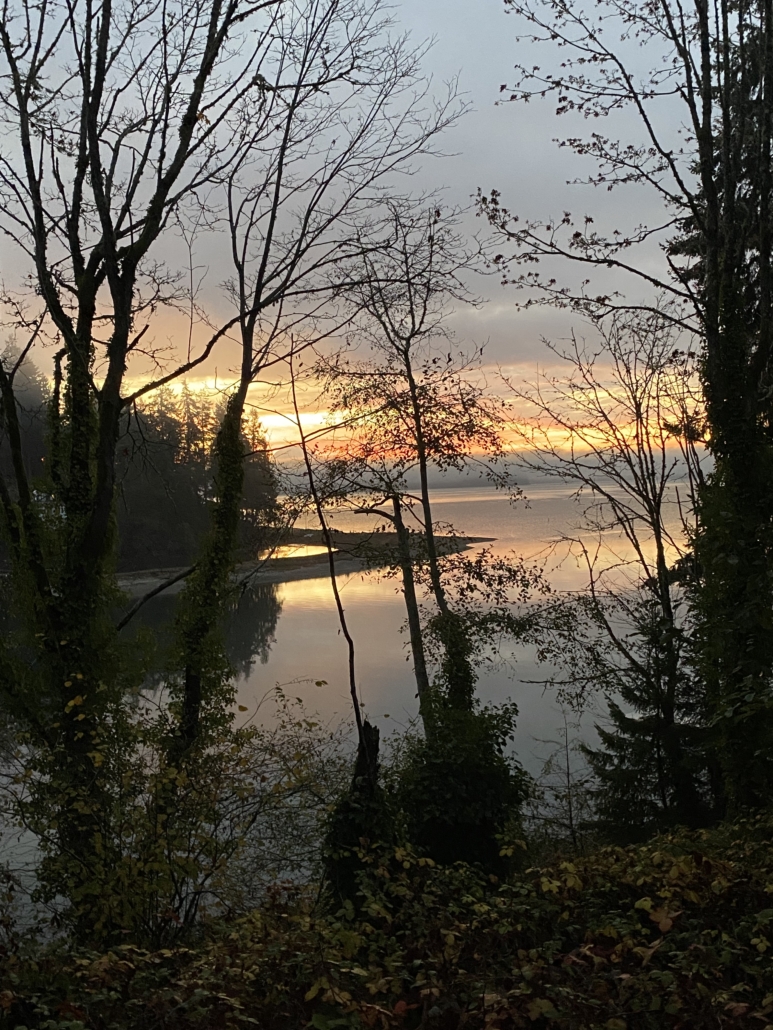
This is either our 9th or 10th annual November retreat to Glen Cove on Hood Canal. Only our host, the marvelous Francine Walls, and myself this year. And the water. And the sunrises. And the kingfishers.
I spent the first half of the retreat obsessing over my Walt Whitman class for the Creative Retirement Institute. (Inspired by him, I confess to writing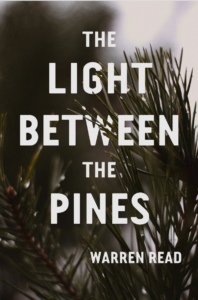 some “catalogues” of nature observations, including the miracle of six deer pecking along the shoreline like sanderlings.) Now that the class is behind me, I’m working on my new poetry manuscript, and reading books by local writers: The Light Between the Pines, a novel by Warren Read (which I recommend), and books by poet, poetry mentor, and therapist Joan Fiset.
Joan Fiset
Last month I attended the launch of Joan’s latest book, Unborn Stars. I brought it home, along with some other titles from Joan’s book table, and put them in my To-Be-Read pile. Not long after, while talking about books of “flash” fiction or nonfiction, my friend Andrea Lewis recommended Now the Day Is Over. That title sounds familiar, I said. It’s the title of a hymn, Andrea said. Not just that, I said, I think I own that book.
 A local writer, Andrea told me. Joan Fiset.
I went home and began reading. Then I read the next book, Namesake, also flash non-fiction, then I read the two books of poems in my possession. In a nutshell, Now the Day Is Over is about Fiset’s father; Namesake, about her mother. Both delve into substance abuse and mental illness. Unborn Stars is about Fiset’s son and their delicate relationship. All of them interweave external, exquisitely detailed events with interior awareness, doubt, and a growing sense of dread.
Finery
We sew doll clothes. Gingham fabric, sheer batiste, polished cotton, crinkled seersucker, white eyelet, yellow pique. My Madame Alexander doll has brown hair. My mother makes a white eyelet dress trimmed in red bias tape and red ric-rac. The back fastens with two snaps, pocket on the gathered skirt in the shape of a heart. I push her in my baby carriage. It was beside the tree on Christmas morning, just like a real baby carriage except smaller, with white wheels and a gray hood that folds up and down. I push it around the house and down the sidewalk, keep my doll’s clothes safe inside a red toy trunk with a silver lock and key
—Joan Fiset, Namesake, p. 47
Although Unborn Stars is better described as hybrid, and includes some longer, prose pieces, most of Fiset’s poems are short and imagistic. The science of protostars is a thread running through and pulling the sections together—”Luminous fragments / too tiny to gather or shape”—though the poems are as much about human grief as astronomy. Here’s one example:
Quickening
overgrown with weeds
a further silence
where the nest wasclose to the water
I recall a first flutter
becoming you—Joan Fiset
In her poem, “Grief,” she writes: “Grief // moves slowly through afternoon, stands / behind me as I wrap gifts // snow has fallen all day and will continue…” Exactly that. Quietly permeating every moment.
In yet another book I’ve been reading this week, I found this resonant passage, from poet Michael Ryan:
In a good short poem a fine sense of relations among its parts is felt, word connecting with word, line with line: as in a spider web, touch it and the whole structure responds. (quoted by Joan Aleshire in Poets Teaching Poets, p. 40)
“[A] fine sense of relations” among families, the same. Joan Fiset’s poems and short prose pieces beautifully bear witness.
I should mention that I’m in a much more optimistic mood this year at Glen Cove, than I was after the election in 2024 (Election Day). (And for my favorite election wrap-up Substack this week, check out Parker Palmer.)
Poets Teaching Poets is an old book (University of Michigan Press, 1996), edited by Gregory Orr and Ellen Bryant Voigt.
You can learn more about Joan Fiset at her website, https://joanfiset.com/.
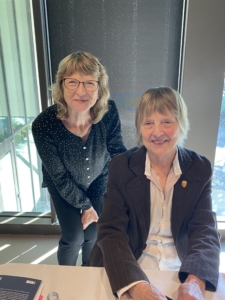
Me with Joan Fiset at her recent book launch

Leave a Reply
Want to join the discussion?Feel free to contribute!