Be Kind, Work Hard, Give Thanks
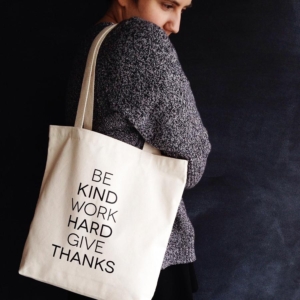
Processed with VSCOcam with s2 preset
I saw this bag at the Pacific Northwest Writers Association (PNWA) conference… which I managed to attend sporadically last week despite also driving back and forth to Olympia to see my mother four times (five times!). PNWA where, incidentally, I came in second (!) in two of the fiction categories (short story and mainstream), and met several agents and editors who invited me to show them some pages.
Up and down. That was my week. Mom was better, then she was worse. Then, a little progress in physical therapy gave us hope. Seeing her grandkids from out of state gave us hope. Learning to accept a new reality gave me more hope than I expected.
Last week I felt really really brave. When my literary agent suggested I find “fresh eyes,” I gave her up without the slightest angst (very unlike me). The bag, by the way, belongs to an editor at Sourcebooks, who would like to see the novel. I met lots and lots of very cool writers who, like me, are throwing their hearts into the ring…
I also met some really wonderful nurses and CNAs who definitely know how to be be kind, work hard, and give thanks.
At this point, on all fronts, I am simply waiting to see what happens next. And I’m taking notes.
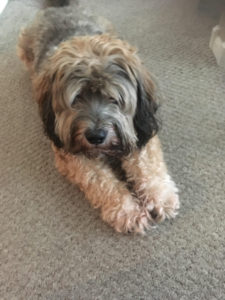
 on what has to happen next. Well, a professional kennel where the dog can stay next week, safely. My friend speculated on what she will do after that. Annie cried. I hope training will be explored, but if you know your dog bites, can you just keep doing what you’re doing? Our lovely dog has introduced us to a trainer who has rescued at least two impossible dogs and turned them into model citizens. So maybe training can help. Maybe dog training is a reflective activity akin to journal writing. All I know is that it’s easy to go on–for years–perpetuating a pattern and feeling stuck and helpless. Helpless and hopeless. But writing in my journal, and rereading and taking my reflections deeper, is a way of recognizing those patterns and…one hopes…beginning to change them.
 borderless relations with nonfictional sources, has found ways to incorporate and exploit journalism, biography, historical texts, correspondence, advertisements, and images. But, since fiction is an invention masquerading as a truth, the riot of intertextuality is often craftily smoothed into a simulacrum of orderly governance: these different materials, the novelist seems to say, possess an equivalent fictionality, and just naturally belong together like this–trust me. Some of the pleasure of reading novels, perhaps especially modernist and postmodernist ones, has to do with our simultaneous apprehension of invention and its concealment, raw construction and high finish. We enjoy watching the novelist play the game of truthtelling.”
 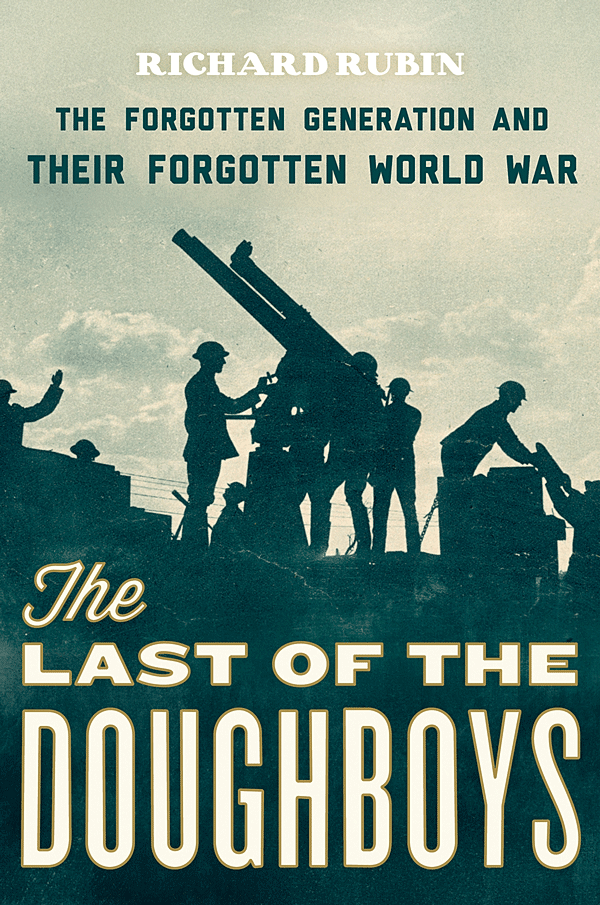 While getting my initial 30,000 words scribbled and typed (now at 23,000…and another notebook still to be transcribed) one of the issues I’ve wrestled with is HOW to bring the Great War more into focus. Yesterday, I found a book of oral histories, The Last of the Doughboys, by