Pádraig Ó Tuama, KITCHEN HYMNS
KITCHEN HYMNS, Pádraig Ó Tuama, Copper Canyon Press, 2024.
I am going to cheat and just give you a few notes, then send you to other, smarter reviewers. You might begin with the first paragraph from Mary Grace Mangano’s review at Jesuit Media Lab, which elegantly makes Ó Tuama kin 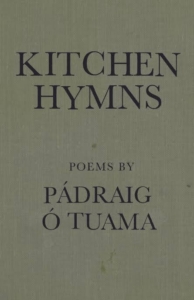 with Flannery O’Connor. Both raised Catholic. Both wrestling like Jacob with God.
Another bonus with this particular poet is that he and his Irish brogue host On Being’s Poetry Unbound.
If you search the Internet, you will find multiple recordings of Ó Tuama reading aloud from Kitchen Hymns. Another bonus.
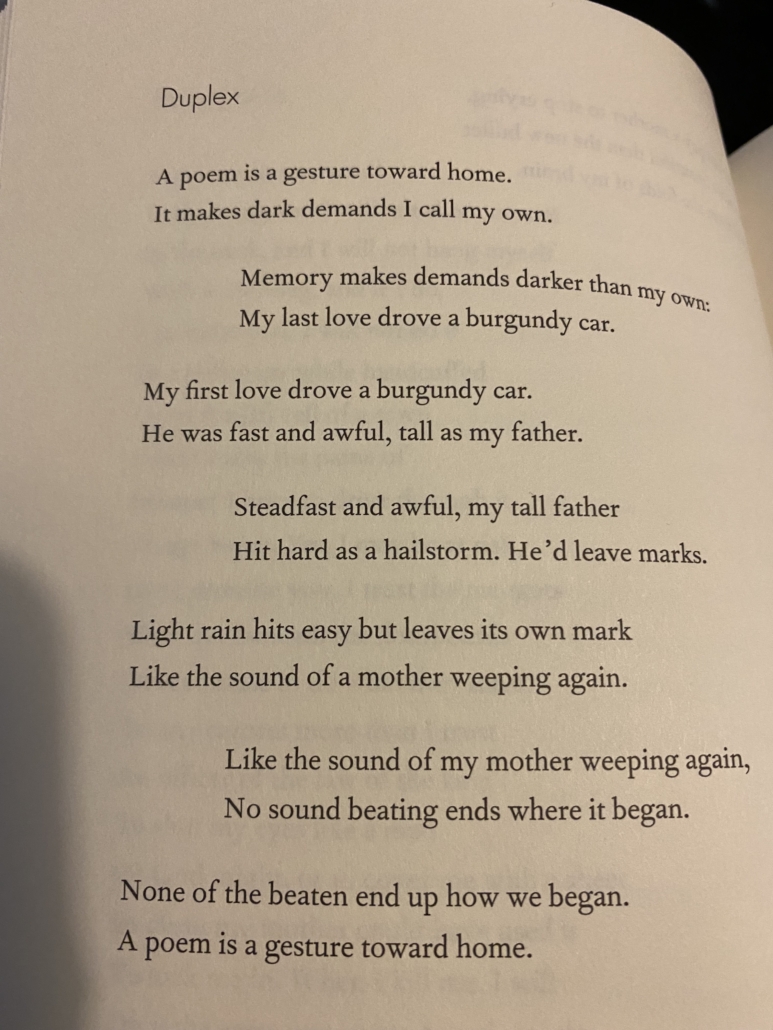
Some of these poems are love poems, some are conversations. Some are blessings. As you settle into the collection, you find Persephone greeting Jesus in hell. Ó Tuama’s sexual poems are both blessings and rites of passage. I wonder if the tradition of metaphysical poet John Donne might be evoked here: “Batter my heart three-person’d God.”
What else can I say about a book that includes this line—
One way or another, shame
can teach you what nothing else can teach you.(from “Rite of Baptism,” p. 82)
I spent a few hours reading and rereading Kitchen Hymns, but I have a feeling it’s a book that will have to be mulled over—for months or years.
Here is the final poem in the book, which, by the way, has lovely symmetry with the opening poem.
[untitled / missæ]
I bless myself in the name
of the deer and ox,
the heron and the hare,
evangelists of land and wood
and air. The fox as well, that red
predator of chickens, prey of cars.
And salmon and the trout
sleeping the reeds.
When the wren wakes, I’ll ask
her blessing, and if she comes out
she’ll bring it. The squirrel buries
when she thinks no one else can
see. I bless myself in her secrecy.
There’s a fieldmouse I’ve seen
scampering at dusk, picking up the seeds
dropped by the finches and the tits
throughout the day. Some nest of frenzy
waits her kindness and her pluck.
I go in the name of all of them,
their chaos and their industry,
their replacements, their population,
their forgettable ways, their untame natures,
their ignorance of why,
or how, or who.— Pádraig Ó Tuama
If you are new to Ó Tuama’s work, his mission, here’s a link to On Being, and Krista Tippett’s 2022 interview with him.

 days. Reading all the poems is one thing, but rereading, thumbing back through, making notes, reflecting—those take a little more time.