Christmas Stories

I was just over at Salt and saw that they have three poems by Lucille Clifton — a one-of-a-kind human being and poet I was privileged to hear in person a few times.  Salt had a Christmas poem by Billy Collins last week (also worth a visit), and in this week’s offering, keeping faith with the season, Clifton’s poems, “mary’s dream,” “a song of mary,” and “john,” i.e. John the Baptizer.

This past Sunday I attended my childhood church and there, too, the message was drawn from one of those leading-up-to Christmas passages in the book of Luke. I have to set the stage here a bit, if you’re to follow where I’m going (which is, my apologies, not quite clear even to me). The couple who now pastor the church are in their 80s. My parents would have loved them. This ministry is a definite calling for the Bakers, and it came quite late in life. So when “Sister Baker” (as we say) talked in her sermon about the angel Gabriel visiting Zechariah, to tell him his wife Elizabeth, “well stricken in years,” would bear a child, a precursor to Christ — well, she had a personal response.

Zechariah tried to tell Gabriel it just couldn’t happen. We’re too old, he said. So he had to be struck mute. As Sister Baker said, when God has a plan, if you can’t get on board, he may ask you to get out of the way. Then — this was her personal response — she added, “I sure hope Gabriel doesn’t show up and tell me I have to have a baby, at my age.” Everyone laughed.

I’m not quite sure where I’m going with this, except for the last two days I’ve been wondering how I can work this anecdote into a poem. It’s easier to imagine a challenge for the fiction writers in my group:

Write a scene in which a character attends a church service and hears a message that makes him or her uncomfortable.

I hadn’t been too sure about this trip, but the church service itself didn’t make me at all uncomfortable. My brother and sister and their spouses were there (my brother said at lunch that he was surprised the church didn’t fall down); also one my of aunts (age 86), and about a dozen of my cousins from all over Southwest Washington. Lots of music. I did a complete flashback to my childhood and wept. Much has changed (the drums and guitars up front), and I knew only two of the people in their small congregation. But there was a time for personal testimony, and an altar call at the end — both could have been scripted from a service when I was seven.

I’ve been rereading Gaston Bachelard’s The Poetics of Space, and this morning I underlined this line:

“our emotion is perhaps nothing but an expression of a poetry that was lost” (p. 6).

That’s kind of the space my thoughts are hovering over.

Here’s one of the poems from Salt:

mary’s dream

winged women was saying
“full of grace” and like.
was light beyond sun and words
of a name and a blessing.
winged women to only i.
i joined them, whispering
yes.

–Lucille Clifton

Mostly, I’ve been wondering what’s calling me right now — what’s completely unexpected and calling me — and how to say “yes” to it.

Written by Himself

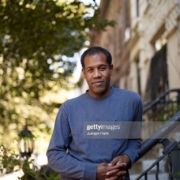
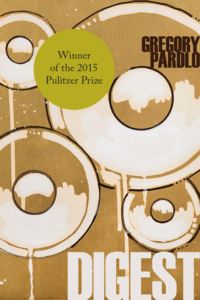
One of the beauties of my pandemic-long poetry practice has been finding a poem by a different poet each week to use as a model—sometimes more of a jumping-off point—for my own work. This week it’s a poem by Gregory Pardlo who won the Pulitzer Prize in 2015 for his book, Digest. After reading this NYTimes piece, and having a look at him at Poetry Foundation—“The Pulitzer judges cited Pardlo’s ‘clear-voiced poems that bring readers the news from 21st Century America, rich with thought, ideas and histories public and private’”—I’d like to read more.

In the NYTimes, Stephen Burt calls his style, “deliberately elegant in a modernist kind of way,” and Pardlo admits trying to lampoon academic language. It’s another vein that intrigues me:

But he also writes intensely personal poems—with scenes that describe shopping for groceries with his daughter or unpack his anxieties about fatherhood—and delivers funny and poignant dispatches from the front lines of gentrifying Brooklyn.

“He’s interrogating the everyday,” the Pulitzer Prize-winning poet Tracy K. Smith said. “Another poet might be afraid to draw on so much of the true stuff that a life is made of.” (New York Times, April 22, 2015)

So here’s our poem:

Written by Himself 

I was born in minutes in a roadside kitchen a skillet

whispering my name. I was born to rainwater and lye;

I was born across the river where I

was borrowed with clothespins, a harrow tooth,

broadsides sewn in my shoes. I returned, though

it please you, through no fault of my own,

pockets filled with coffee grounds and eggshells.

I was born still and superstitious; I bore an unexpected burden.

I gave birth, I gave blessing, I gave rise to suspicion.

I was born abandoned outdoors in the heat-shaped air,

air drifting like spirits and old windows.

I was born a fraction and a cipher and a ledger entry;

I was an index of first lines when I was born.

I was born waist-deep stubborn in the water crying

ain’t I a woman and a brother I was born

to this hall of mirrors, this horror story I was

born with a prologue of references, pursued

by mosquitoes and thieves, I was born passing

off the problem of the twentieth century: I was born.

I read minds before I could read fishes and loaves;

I walked a piece of the way along before I was born.

—Gregory Pardlo, from Digest p. 3

Find a recording of Pardlo reading “Written by Himself” here.

I want to know if this is the poet speaking, the “supposed person of the poem,” or is it a digest of voices, rising together?

I admit that I’m struggling with what I’ll write in response to this assignment. I mean, how do you follow, “I was born in minutes in a roadside skillet,” or “I was born a fraction and a cipher and a ledger entry”? How about “I read minds before I could read fishes and loaves”?

But I’m about to open my notebook and see what will happen.


Shirley Kaufman’s “Lake”

A friend recently shared this poem by Shirley Kaufman (1923-2016). I wrote it into my morning journal, and I have been pondering it every morning since, wanting to understand how it works its magic. “She is more lost to me than ever,” is such a simple, unadorned way to begin. Then—without ever describing the lost friend—the poem conjures a dreamlike (and somehow distinct) vision.

Lake

She is more lost to me than ever
where I stand on her birthday in the June light
next to a lake she never heard of.
The trees at the edge are dissolving
under themselves. She’s not in my dreams,
she has returned to her first language,
drifting over the mountains
while my father rows the small boat.
His sleeves are rolled up
and he’s milder than I remember,
though his suspenders are cutting his shoulders
and the oars blister his soft palms.
The mountains are upside down. They’ve left me
with someone on the shore.
I watch how she leans back
trailing one hand in the water,
her pinned hair starting to fall down
and her eyes crinkled. I forget everything
I had to tell her. If only she’d wave
before we are gone. If only I knew
what she’s saying about the future
that makes her happy.

—Shirley Kaufman (from Rivers of Salt)

I am caught up in two big projects, and don’t seem to have the wherewithal to explain what makes me happy about this poem. But maybe explaining and analyzing this poem isn’t the right thing to do anyway. Maybe the right thing to do is to conjure a dream of our own.

Persimmon Tree and Windfall

Persimmon Tree

Remember earlier this year when I spent 100 days sending out my work?

Here are two of the results of that blitz, both of which hit my in-box or mailbox this week.

The first is a creative nonfiction essay — “About a Marriage, from A to Zed” — in the superlative Persimmon Tree: an On-line Magazine of the Arts by Women over Sixty. Click HERE to read my essay. The entire on-line issue is free (donations welcome).

“About a Marriage” was featured in the promotional email, with this thumbnail review:

This inventive and constantly intriguing essay does just what the title says. But Bethany Reid’s alphabet is like no other. The referent for each new letter is so unexpected that, by the time she has brought us all the way from A (for anorexia), stopping briefly at F (for Fight or Flight), and S (for Spaghetti, of course), nothing that Z could possibly stand for will surprise us. Or maybe it still can.

As a bonus, when I visited the page, I found comments from three complete strangers. (I guess I can stop saying that only my friends read what I write.)

The Passing of Windfall

The other publication is a print one, and a long-time favorite of mine, Windfall: A Journal of Poetry and Place. It was with genuine sadness that I learned the next issue will be Windfall’s last. “We have never broken even on any issue in twenty years,” the editors admit in their foreword. “Now the costs have risen above our capacity to absorb them.” All I can say is, this is a crying shame.

My subscription ran out on this issue, so I’ll be sending $7 to get the last issue. I hope you’ll consider joining me, and maybe purchasing Fall 2021 or other back-issues as well.

Fall 2021, well worth the cost, features poems from 27 northwest writers — including Christopher Howell, Penelope Scambly Schott, Donna Mendelson, and Carlos Reyes. It ends, as does every issue of Windfall, with an essay about poetry and place, written by editors Bill Siverly and Michael McDowell. (All of the essays are available at their website.) The essay for this issue, “Monuments and Poetry of Place,” included several poems. Here’s one:

Standing beneath the Statue of Sacagawea in Washington Park during the Racial Justice Protests of 2020

“a woman with a party of men is a token of peace” —Captain William Clark, 1805

Bronze traveler with baby on your back,
twenty tons of Oregon copper were mined
to make you. You’re looking beyond me.
From where I stand you’re unreachable.

Across the world people are tumbling
statues, taking down old heroes (now pariahs)
and erecting new ones, renaming buildings,
mascots, boulevards, dreams.

Bird Woman, what do we do with you?
We aren’t sure how to say your name,
we don’t know when you were born or died,
but we know you, a chief’s daughter, were never paid.

What if the Hidatsa had not kidnapped
you and forced you into slavery?
What if your Hidatsa man hadn’t lost at gambling
and traded you to Charbonneau to pay the debt?

Young native sold to white man.
Small woman helping men.
Some might call you traitor.
Some might see you as victim.

You are the axis, pathfinder, key.
Without you there would have been
no horses, no foraging of forest food,
no otter robe, no shared language.

As a girl I played here years ago with my sisters.
On hot August evening we ate barbequed chicken

Washington Park statue of Sacajawea and her baby, from Wikipedia

on paper plates with sweet corn and coleslaw.
Barefoot, we ran circles around you.

Lemhi Shoshone woman, strong swimmer,
cooking camas, keeping peace,
when I walk alone in old forests
of ambiguous shapes, I almost see you.

—Christine Colasurdo

Click on this link to visit Windfall to purchase a copy. You’ll find a form to print out and mail in with your check (beautifully old-school).