Posts

Christopher Howell, THE GRIEF OF A HAPPY LIFE

THE GRIEF OF A HAPPY LIFE, Christopher Howell, Pacific Northwest Poetry Series, University of Washington Press, 2019.

On the back cover, Kathy Fagan writes: “Howell has been for many years my go-to poet of choice when I need to be reminded of what a poem can do, what a poetry collection can do…”
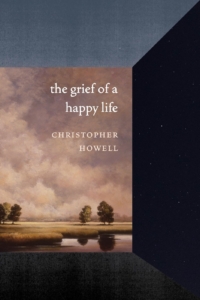
I can say the same. Howell asks, in “The Giant Causes the Apocalypse,” “[W]hat will comfort us / as we hear our singing stop?” This sometimes strange, sometimes disconcerting collection of poems is an exploration of that question.

The grief in the title permeates the book, without weighing it down, like these lines from “Turnpike and Flow”:

We say it is a long road
but it is only
a life
slipping past, dark and bright, abandoning
a few broken tools and shoes, once
in a while something beautiful but too big
to carry.

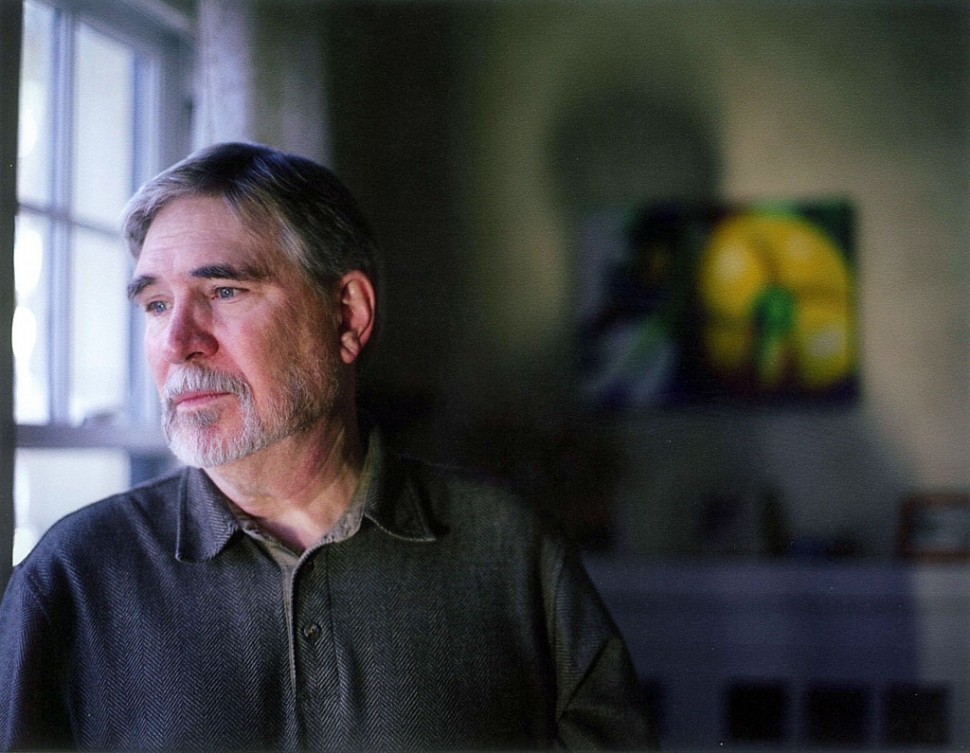
Howell is truly a gem in the Washington State poetry world. He has 20 books. He teaches in the master of fine arts program at Eastern Washington University, and is an editor/director for both Lynx House Press and Willow Spring Books. Let us say he has a large and interested following. So it’s odd to find, bracketed in the middle of a long poem, these words: “[Sometimes I want you to stop / reading so I can / go on alone into the dark sublingual light…” (“Cloud of Unknowing”). I love the juxtaposition of dark with light. It’s a sentence (it’s a whole book) that takes chances.

Maybe Howell isn’t so much exploring the big questions, as urging his readers to explore them.

Here’s the final poem, which first appeared in Poetry International: 

Homecoming

I put on my good black shoes, my shirt
of grey softness that reminds me of luck,

and the blue hat given me
by a child who left

this earth that even her shadow
made so beautiful.

And then, well, I set out
down the clamor of roads

and, almost by accident, onto paths
through dense apothecaries of evergreen and fern

and finally to meadow and orchard
risen from the dead into a contentment

that did not know me
and wouldn’t take my money or my name.

Did I not see I was the same no one
who had lived there always

and could never return?
Did I not perceive the multitudes

waving their arms like wind to be known again
and gathered like pieces of a god?

How many many years, how much spent blood,
to unpilgrim ourselves, to stand before an empty house

glistening with the grief of a happy life.

—Christopher Howell

“…and after that there must be the dancing” he writes in “Surveillance.” Or, “the dancing / and the weeping / and the feast.”

You can learn more about Christopher Howell at https://www.eou.edu/mfa/faculty/christopher-howell-poetry/, or on Wikipedia and Artist Trust. I found “A Conversation with Christopher Howell” about this particular book at https://truemag.org/2018/11/08/a-conversation-with-christopher-howell/.



Can I Use Dialogue in Poems?

I’ve been reading a friend’s poems, trying to be helpful, and one question that has come up is how to represent dialogue in poems. So I’ve been scouring my books for examples, and I’m a little surprised to see it done so infrequently. My advice: you can set the speech in italics, or you can use quotation marks, or nothing at all. (Choose one method and be consistent, at least within a single book.) But, as an editor once told me regarding a chapter of one of my novels: “Cut dialogue to the bone.” That is, whatever you do, keep it as spare as possible.

That’s good advice, generally, for writing a poem. If you don’t need a word, let it go.

Here’s an example of dialogue—and spareness—from Jane Kenyon, whose book, Otherwise: New and Selected Poems (Graywolf, 1996), is a favorite of mine. It’s fun to see, too, the description of those ancient mimeographed sheets from pre-Xerox days. (Remember Xerox?) The poem is a time-capsule from Kenyon’s childhood:

Learning in the First Grade

“The cup is red. The drop of rain
is blue. The clam is brown.”

So said the sheet of exercises—
Purple mimeos, still heady
from the fluid in the rolling
silver drum. But the cup was

not red. It was white,
or had no color of its own.

Oh, but my mind was finical.
It put the teacher perpetually
in the wrong. Called on, however,
I said aloud: “The cup is red.”

“But it’s not,” I thought
Like Galileo Galilei
muttering under his beard….

—Jane Kenyon

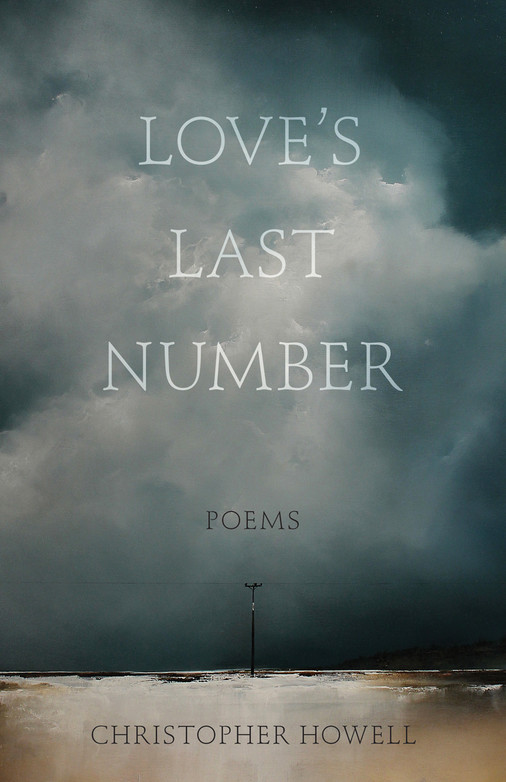
Another poet who came to hand who uses dialogue (and in the same way, with quotation marks) is Christopher Howell, whose title poem in Love’s Last Number (Milkweed, 2017) breaks my heart every time I read it. It begins with another early-learning anecdote:

She was four years old when she told me
the children at her daycare had been arguing
over which was greater, infinity (pronounced
“finity”) or the last number.

In a later stanza, Howell drops in a single 12-word quotation—setting it as if in amber, given that the poem is “in memoriam.” The opening is so simple and direct; one could argue that it is prose, but it introduces us to a poem that, as it continues, becomes a stunning and poetic paean to what counts.

Maybe the real lesson here has to do with that. Not everything that counts can be counted (as Einstein probably didn’t say). But when making a poem—even in free verse—one of the tasks, it seems to me, is to make everything count.

Christopher Howell’s Love’s Last Number

I had a lovely day. This morning I saw two old friends, women I met in Nelson Bentley’s poetry workshop 30+ years ago. I had the time wrong to pick up my daughter, by an hour, and so was able to take a walk on a nature trail I discovered between Lynnwood and Edmonds. This afternoon, my husband I went to see The Post, which was splendid, and had dinner out.

Plus: I spent spare moments all day reading this luminous book of poems: Love’s Last Number, by Christopher Howell (Milkweed, 2017).

Choosing which poem to share with you is not easy. One of the things I admire about Howell is that he is able to begin with one subject–the disappearance of the dog he had in childhood, for instance–but deftly shift to something you wouldn’t have guessed was related: “And what of the sea, another sort of road, Beowulf’s / whale road, St. Brendan’s miracle passage.” Except now, thanks to Howell, it’s obvious that they are related.

Many of the poems here reflect on the poet’s experiences in the Vietnam War. Throughout the book, time walks rough-shod over us, and also hauls us back, willy-nilly, into memories that shatter — or delight.

Here is the first poem in the book:

A Short Song

This is a song of our consciousness, that faltering
old man who will never make it across the bridge,
who sits down in the grit and dust of it with his wrinkled sack
of groceries that will have to last. A song of his foolish bravery
and terror, his hope that will not stay focused, that wanders
a springtime path between peach trees
and the berries, humming something, forgetting,
and humming again. A song of his wishes
tossing their hats in the wind and watching the last boat
depart, its cargo of nameless meaning casting flowers, waving
out of sight as the sun goes down.
It is a song of memory’s little ways and sudden corner-like loveliness
turned to smoke and broken glass it eats and eats
to stay marginally alive. A song of the bridge that never ends
really, and never whispers this
as the old man listens for the one spot of silence
or the one clear voice that might be his.


You can buy Love’s Last Number on Amazon: