
I Sing the Salmon Home

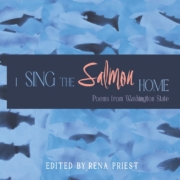
I SING THE SALMON HOME: POEMS FROM WASHINGTON STATE, edited by Rena Priest. Empty Bowl Press, Chimacum, Washington, 2023, 275 pages, $20 paper, www.emptybowl.org.

I don’t believe in magic. I believe in the sun and the stars, the water, the tides, the floods, the owls, the hawks flying, the river running, the wind talking. They’re measurements. They tell us how healthy things are. How healthy we are. Because we and they are the same. That’s what I believe in. Those who learn to listen to the world that sustains them can hear the message brought forth by salmon.

—Billy Frank Jr. (epigraph to I Sing the Salmon Home)

Yesterday’s mail brought this delightful compendium stuffed with salmon poems. Editor Rena Priest (our current Washington State Poet Laureate) has selected 167 poems as varied as wild salmon themselves. The section titles give us a clue to the contents: “Wild, Sacred,” “Sojourn,” “Invisible Thread,” “Fish School,” “Gratitude,” “Choices,” “Vigil,” “What We Owe.” With a preface from Priest herself, and an introduction by Empty Bowl co-publisher Holly Hughes, this anthology is truly a gift.
In the preface (a rich compendium, itself), Priest outlines “the life cycle of this anthology,” and continues:

I am a Lhaq’temish woman—a member of the Lummi Nation. We are salmon people. Lummi is a fishing culture. We invented the reef net—an innovative technology dating back more than ten thousand years….In the cosmology of the reef net, the net symbolizes a womb, and the salmon are the sacred spark of life that will carry the people into another cycle. (xiv)

In the net of this collection, there is so much bounty. This, for instance, the title poem, fittingly by Andrew Shattuck McBride: [note: the last line of each stanza should be indented; if anyone knows how I fix that, please let me know!]

Winter Run, Whatcom Creek

A close friend says she had a fabulous salmon dinner
prepared by her daughter’s spouse. I have questions, ask,
“What kind of salmon?” She smiles. “The good kind.”
I cheer the salmon on.

I am not of this place, forego eating salmon. Others—my
sisters and brothers, and orcas—must have salmon to survive,
to renew their lives, their compact with these lands and waters.
I too sing the salmon home.

By choice I have no permit or pole or lure.
I receive sustenance from watching the lean clocks
of salmons’ bodies pushing against creek waters.
I cheer the salmon on.

Lines and color-infused lures hang entangled in trees’ branches.
A beefy, youngish man with a careful blank expression
sits on a bench. His young do, leashed, lolls nearby.
Beyond, on bloodied grass, two salmon pant
I sing the salmon home.

I have questions, decide finally not to ask. What do I know?
This: Along a short stretch of creek just below the noisy falls,
salmon—so close to home—swim a gauntlet. And this;
Salmon strive to live till they spawn.
I cheer the salmon on.

—Andrew Shattuck McBride

You know McBride’s name as he was one editor of the recent anthology, For Love of Orcas, from Wandering Aengus Press, and he was one of the people who encouraged Priest to do this book.

I Sing the Salmon Home contains so much lush detail, so much praise, so many ripples of words: “sweet water, sun-flecked, flung skyward” (Joanna Thomas); “tease apart the iridescent / infinite in every scale” (Shankar Narayan); “Salmon running the Sultan // River in a long silver link chain with / amethyst and ruby cabochon eggs” (Laura Da’); “Between sparse old shoreland spruce / the moon is a silver wing” (Robert Sund). With 167 poems and poets to choose from, all I can say is that making choices for this review was not easy.

And, yes, lots of poems about eating—and blessing—salmon, or, perhaps I should say, how the salmon blesses and nourishes us. So, one more short poem, this one written as a “nondominational blessing for meals and gatherings” (as we might consider this entire collection):

Water by Salmon

As life is taught by death,
and the Sun by Space,
so Clouds are taught by Land
and Rains by Place.

As Mountains are taught by Plains,
and Rivers by Lakes,
so Trees are taught by Soils,
and Elements by their Weight.

As Deserts are taught by Shores,
and Ocean Waves by Wind,
so Depth is taught by Height,
and Tides by Celestial Spin.

As Sound is taught by Silence,
and Insight by Reason,
so humans are taught by Water
and Water by Salmon.

—Phelps McIlvaine

I hope I’ve inspired you to want to hold this book in your hands. It will be in public libraries, as well as available from Empty Bowl Press’s website and your favorite independent bookstore.


And, yes, it is National Poetry Month, and what better month to be reading a poetry book-a-day? If you’re curious, you can skate back to my earlier Aprils (as I’ve been doing these poetry-book-a-day blog posts for a few years now). I also want to apprise you of the August poetry book challenge, which you can read about here—https://www.thesealeychallenge.com/—or here, at Kathleen Kirk’s blog—https://kathleenkirkpoetry.blogspot.com/2022/08/mathematics-for-ladies.html (or at ANY of her August blogposts).

How to Catch A Mole

When my friend Madelon told me about this book, I was skeptical. A book about catching and killing moles? A philosophical, poetical book?

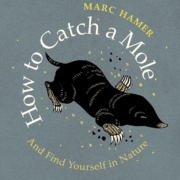
Every summer, Madelon and I get together — at least a few times — to write. Admittedly, we don’t always write. We sit in her garden and talk. We sometimes walk. If the weather is damp (or the heat, excessive), we sit in Madelon’s living room, surrounded by her books. She told me about Marc Hamer’s How to Catch a Mole (Greystone Books, 2019) on one visit last summer. At the next visit, she read aloud from it.

 When I am out in the countryside, walking or hunting, I become solitary and leave my man-nature behind. I become a different kind of creature: something more fluid, free, adaptable and instinctive. This is something developed in me when I was young and living in the wild. Living moment to moment with no thought or feeling, no ideas or obvious mental process going on, just instinct, an awareness of the field, but not a separate awareness of myself being in the field. We seem to become the same thing. (p. 49)

Each time I visited, I heard more. Finally, Madelon handed me the book. “You should read it.”

Marc Hamer lives in Wales. He has done other things — art school, notably — but How to Catch a Mole, his 2019 memoir, chronicles his years working as a twrchwr (Welsh for molecatcher) and brings to vivid life his love and awe in the presence of nature.

It’s hard to share examples when there is something worth quoting on every page:

There are no people to watch, to see, or to know that I am here in the early light with the singing birds. There is winter sun and websilk woven through the silhouetted branches, and it sparkles like rippling water. (p. 110)

You learn a great deal about moles in the book, and at moments the lens focuses only on moles. But more often the lens widens and you see that Hamer’s subject is always life itself:

The closer things are to being nothing, the more tender they become, and the more tender are the feelings they bring out: a newborn child, a hatchling, a dying old man. A dried seed head surrounded by others; a skeletal leaf floating on a pond; a piece of broken pottery in a pile of soil; half an eggshell lying on the grass; a small bone from a rabbit’s leg lying in the sand dunes. Small things that are near their end. (p. 146)

Hamer is now retired from mole-catching, an event he chronicles in this book. And I can’t skip telling you that each chapter ends with a poem, often to or about his wife, the beloved Peggy, waiting at home (who is also — I was pleased to learn — the suspense novelist Kate Hamer).

He is still writing. In 2021 his Seed to Dust was published to acclaim. But I want to end this review with this longish (and ominous) passage from How to Catch a Mole, in his chapter “The Future”:

A fine-looking garden is a sterile place. A perfect green lawn is only kept that way by continually dosing it with chemicals. A lawn that is not treated will naturally become home to a massive number of species of birds and worms and native wild plants, crane-fly larvae, beetles, invertebrates. There are people who do not want living organisms in their gardens, and they spray their lawns with chemicals that kill the worms so there are no worm casts, moles, or birds pecking at the grass, then they spray it with chemicals to kill the crane-fly larvae so there are no magpies, jays or crows digging up the grass to get them, and so there will be no daddy longlegs in the summer; in the spring they spray it with chemicals to reduce the growth of the grass so they do not have to mow it so often and other chemicals are used to kill the moss and weeds and make the grass greener. For some, even mowing is too much, so they pay to have the grass stripped off and replaced with plastic grass that you can smell as it warms under the hot summer sun and will last until the world ends. (p. 190)

He calls his life “a small life,” and “a life handmade by me.” It is a life that seems as far from plastic grass as one can get.


Where You’ll Find Me

On my to-do list for today is “write blog post.” So, here goes. What I’ve been up to, and a little of everything else.

I have finished my poetry manuscript. “Finished”? I finished it last April, too, and sent it out, then withdrew it from several contests. I couldn’t say why it didn’t feel ready, it simply didn’t.

A friend suggested that I not think globally, condemning the entire ms, but to instead focus on individual poems. What I actually did was ignore it. I took a class. I worked on my send-out practice. I (finally) returned to my mystery novel. Then, in October, I finished the rewrite of the mystery.

And the poems were still sitting there, muddy and neglected, their unwashed faces looking up at me.

I again found useful distractions. A short story re-write, notably. Then, I broke my arm and was unable to type.

I had been fantasizing about a writer’s retreat, or just a week anywhere in an Air BnB alone with my story and…maybe…my poems. With the retreat option off the table, I made a decision to resort to my practice from when my three daughters were small and writing felt like an edifice without a door, impossible.

I would sit with my poems for 15 minutes every morning.

Even in that first awful week with the immobilizing splint, when I couldn’t type, I could page through poems and reread them. I could mark them up and scribble revisions. After a day or two, I began setting my timer for 25 minutes-on / 5 minutes-off (the Pomodoro method) and I often found myself putting in an hour or two.

Every. Morning.

Even Christmas Eve. Even Christmas Day. If I didn’t break through to the hours, I at least set my timer and did the 25 minutes.

Last summer — while working on the novel — I gave up some time-wasting habits (TV on my iPhone; Spider Solitaire, which is my crack cocaine; listening to audio books). Or, I mostly gave them up. While working on the poems, and perhaps feeling sorry for my poor broken self, I slid back into all these habits. It took several weeks before I recognized I was self-medicating.

During my halcyon months on the novel, I had hit on a method of reworking a chapter, then recording it, sending it to my phone, and listening to that (instead of an audio book by anyone else) on my walks. This was genius, by the way. I don’t know if it will work for you, but it was a huge breakthrough for me.

At some point early in January it dawned on me that I could record the poems — especially the most troublesome ones — and listen to them while I walked. Again, big breakthrough. I was almost … there.

Then, sometime in the last week or so I found myself back at that edifice — the big, blank, doorless one.

Perhaps I shouldn’t admit this, but it felt as though I wasn’t at the foot of a blank wall, but stuck up high, poised to jump. It was despair. The poetry book — which is about the extremely emotional topic of my childhood on a farm, my parents’ deaths, the loss of the farm —  would never be done. I was trapped. The book would never be good enough. I would never be that person, that writer, who can do my story justice. Then, like someone waking up from a bad dream, I recognized where I was and I knew I had been there before.

In the past, whenever I felt this sort of despair over a writing project, I floundered around searching for someone to save me, maybe a whole committee — my steering committee — some august body to weigh in with all their considerable authority and tell me what to do.

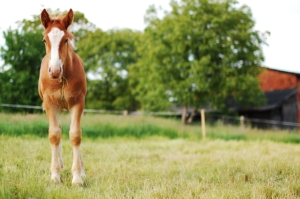
I woke up one night — from a dream? into a memory? — of sitting in the hayfield beside our barn, and watching a foal die. (“A” foal? The foal, Brandy’s foal.) I experienced exactly what Bessel Van Der Kolk describes in his book, The Body Keeps the ScoreI wasn’t remembering it, I was living it. My heart was pounding. I was wide awake, terrified, horrified. I could see my uncle’s face, hear his voice: “That mare has plenty of milk.” I could not just see him turning to walk away, I could feel him walking away from me. I could feel my own words stuck in my throat, choking me.
I am strongly considering not posting any of this.

In essence, in my pit of despair with the poetry manuscript, I saw that I needed what I needed when I was a kid on a farm — what I wasn’t able to do when I was that skinny, freckled girl who couldn’t or wouldn’t speak up and insist on her own voice, her own truth.

I needed to listen to my own counsel.

That foal was not the only loss I’ve experienced in my life, and I’ve often tried to deny its importance. But the truth is it was important, and early, a preface to adulthood and adult cares. It changed who I was, who I would grow up to become. I’ve written this story before — in poetry and prose — and sometimes I think I will never be finished writing it. The foal is (perhaps strangely) absent from this new book. In short: including her this time around seemed to tip the book over and unbalance it. Even so, whenever I fall back into this visceral memory, I know that I’m being asked to wake up to some reality and, well, own it. I am being asked to speak up.

Is the poetry manuscript now perfect? No, not even close. But it has reached a point where I’m pleased with it, where it feels possible to share it. It is out to four contests, and I have a spread sheet with several more to send to as they open and deadlines loom.

I had planned to say more — maybe something about how AI apps can’t write with your peculiar history, your emotional depth, or your brilliant sarcastic humor. I had meant to share a poem. But — for today — I think this is enough.

So that, my friends, is where you’ll find me.

Giving Thanks for 2022

This afternoon (Dec. 31) I helped pick up fir and cedar limbs in our backyard and now my arm is twanging. It’s been 4 weeks! Isn’t it fine now?

But I promised myself I would do an end-of-the year round up of my submissions, and I’m not going to let my arm stop me.

If you’re looking for on-line and print venues for your poems and other writings, maybe this post will be of interest to you, too.

In 2022 I made 101 submissions of poetry, and 28 of prose pieces.

Sixteen venues said yes to 22 poems, one story, one CNF (creative nonfiction piece), and two book reviews. If you’re new to sending out your work, this is actually a very good return.

One poem won a contest: Edmonds Arts Council, Poets Perspective; one poem was Pushcart-nominated; and one received a Best of the Net nomination.

In an earlier post this year I shared that I had a goal of 100 rejections in 2022. I didn’t make it. I heard a firm “no” only 71 times and among those I had a number of encouraging notes and invitations to resubmit. (It’s all good, in other words.) A large number of poems and about 4 essays are still out, some from as long ago as February, 2022, so I could (conceivably) get to my 100 rejections.

Of course it’s way more fun to look at the acceptances. I’ve shared a few of these over the year, but recently the mail brought my contributor copy of Catamaran, a journal which, if you don’t know it, you should. As their banner says: “West Coast themes, Writers and Artists from Everywhere.” My poem, “A Mask of Forgetting,” is paired with art by Elizabeth Fox, and the whole thing is beautifully put together, well worth the trip.

This month I also received a contributor copy of Peregrine, from Amherst Poets & Writers. They picked up two of my poems: “Reading Andrew Motion’s Biography of John Keats,” and “Every Cell of Me.” I appreciate all the on-line journals now encouraging writers, but it’s still a treat to get a copy of a real, flesh-and-bone journal.

Speaking of poems-paired-with-amazing-art: check out my poem, “Lessons in Beekeeping,” at Open: A Journal of Arts & Letters. The art, “Old Bee Farm,” by Clara Southern, is perfect.

And, though I’ve mentioned it before, I want to tell you again about Escape Into Life, which I consider one of my luckiest finds ever. Kathleen Kirk and the review editor, Seana Graham, have been incredibly generous to me. (Not to mention the prize nominations. Well, okay, to mention them.) Over the years they’ve published quite a few of my poems, and book reviews, always pairing the poems with gorgeous art, as in their recent Dog Days 2022 feature, with art by Elke Vogelsang.

I’ve been sending out poetry for decades, and I have very little ego invested in the process. Prose send-outs, however, and prose acceptances, are fairly new for me. For a long time, I would once in a while (every other year or so) send a story out, and then I’d be discouraged and forget about it. Taking a Creative Nonfiction class where we are REQUIRED to submit work to journals has broken me of that bad habit. Earlier this year I was hugely proud to have an essay about my mother, “My Mother’s Birthday in Ireland,” published at Chautauqua; and to see my fourth published short story picked up by Kithe (another gorgeous print journal).


Kithe (kai-the) is an old Scottish word that means to make or become known. At Kithe, we believe that all creative endeavors are an effort to be made known. We show through our language and our art what and who we are, and in doing so, we are made known to one another.  –from their website

Very recent acceptances — and definitely journals or websites for you to check out — are Descant, The Bookends Review, Empty Bowl Press, and Braided Way: Faces & Voices of Spiritual Practice. 

All done bragging. I hope this is helpful to you in some way. Now, to put my arm back in the sling and find the ice pack. And maybe sneak out for one more walk today.

In 2023, I hope you write.