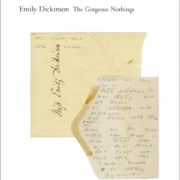
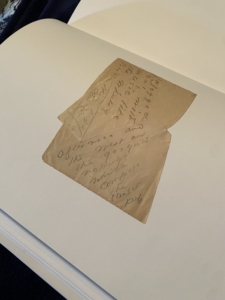
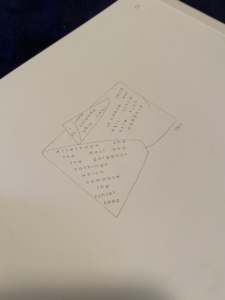
Another book I’m reading—very, very slowly—is Emily Dickinson: The Gorgeous Nothings, compiled and edited by Marta Werner and Jen Bervin. (Christine Burgin / New Directions, 2013). The work of at least twenty years for the editors, these late fragments and drafts, scribbled on envelopes and the backs of letters, come to life in this edition, “itself a work of art,” as Susan Howe writes in the preface. It’s the next best thing to sitting in an archive and handling the actual materials that Dickinson touched.
I attended a sunrise service this morning, and standing on a beach at dawn made me think of Dickinson and her “gorgeous nothings.” It makes me happy to be able to share it with you.
Okay, okay, I know it’s been a long time. What have I been busy with?
Trying to undo some of the house problems that I had paid little or no attention to for the previous 40 years of my life. (For the previous 69 years of my life, now that I think about it.)
Trying to hold my finger in the dike as if to stop a small leak in our finances, when — in all truth — there’s a Snoqualmie Falls at flood-time cascading over the top.
Trying to read only so much political news so as not to plunge myself even further into the morass. (I appear to be mixing metaphors, but stay with me.)
Having some good visits with Bruce at his new home — even planning a Valentine’s Day lunch with him and two of our daughters later this afternoon.
Trying to keep on keeping on writing, even a little bit, every day, because I know writing will save me.
Somedays it feels as though someone has grabbed up my life, turned it upside down, and shaken it. Somedays I feel empty, and bereft. Somedays I feel empty and ready to be filled with something new. Something newly mysterious but maybe in a wonderful way. “Be curious,” my therapist says, and I write those two words on a notecard and pin them on the wall above my desk. BE CURIOUS.
Change is hard, but I suspect it’s the cost of living in a human body.
created by Kelli Russell Agodon and shared today in her Valentine’s Day Substack
Previous-Bethany (who hangs around) likes to curl into a fetal position (a lot) and say things like, “I have no talent for this!” “I can’t do this!” But I am changing. I’ve attended a No Kings protest, I’ve written to senators and congress people, I’m getting a new roof (right now in fact, much hammering overhead), and new flooring (much needed but on hold), and dealing with a wet, rotted sub-floor in the kitchen (not sure how that’s going to turn out). I asked my therapist, “Am I going to get through this?” And she said, “You are getting through it.”
And, other kinds of writing keep seeping out, in part thanks to Sheila Bender’s on-line class about writing grief. In addition to Sheila’s books and my classmates’ posts, I’ve also been reading an anthology, The Language of Loss: Poetry and Prose for Grieving and Celebrating the Love of Your Life, edited by Barbara Abercrombie; and Finding Meaning: the Sixth Stage of Grief, by David Kessler, which The Los Angeles Times calls the very best kind of self-help book.
My typical strategy now would be share a poem or short prose section from one of these books (so many excellent choices). Instead I’m going to share my own new poem. Excuse any hammering or thumping that creeps into the audio. And thank you for listening.
Grief wakes me in the morning
and puts me to bed at night.
She stirs sorrow into my oatmeal.
She fusses, adjusting the light
as I read, offering a blanket.
When I leave the house,
she grabs her shoes and goes with me,
walks fast, takes my hand.
Last winter, too, she was here
though wearing a mask of anger.
Didn’t I wake you then, she asks,
didn’t I lie down beside you?
Sometimes she is a mother,
sometimes a lover,
sometimes my child. I pull her
onto my lap. I begin to call her
by my own name.
—Bethany Reid (2.11.26)
https://www.bethanyareid.com/wp-content/uploads/2026/02/IMG_7680-scaled.jpeg25601920Bethanyhttps://www2.bethanyareid.com/wp-content/uploads/2021/02/reid-logo-161-300x125.gifBethany2026-02-14 19:40:152026-02-14 19:42:32What Am I Doing Here?
My Creative Retirement Institute class on Emily Dickinson’s fascicles wrapped up yesterday. The beauty (and the weirdness) of it was that focusing on the fascicles made it impossible for me to turn the class into “all of Bethany’s favorite E. D. poems.” In each class I asked, “What caught your eye? What do you want to bring to our attention?” As a result, we put a microscope to poems I’ve barely given a glance in the past. And everything we picked up gave us so much to talk about. It was ideal.
Today I’m having my writing group here, at my house. I’ll bake Emily’s Coconut Cake, and we’ll drink sparkling water, and read poems to one another. What could be better?
Celebrations are popping up everywhere on the Web, but here are two that made their way to my in-box:
Pádraig Ó Tuama’s On Being newsletter: https://poetryunbound.substack.com/p/you-cannot-extinguish (my only quibble with his post is that he says Dickinson bound her fascicles to send to correspondents, and though she mailed many poems with letters, I don’t believe there’s evidence for the fascicles being shared). He describes her poems and letters as a tribute and reminder of what “a deep pursuit of a vocation can do.” True!
And of course the Emily Dickinson Museum—visit this site today to see all the hoopla (including a virtual program, which you, too, can join via their registration link): https://www.emilydickinsonmuseum.org
And, do I have favorite Dickinson poems? Oh, so many!
I taste a liquor never brewed –
From Tankards scooped in Pearl –
Not all the Frankfort Berries
Yield such an Alcohol!
Inebriate of air – am I –
And Debauchee of Dew –
Reeling – thro’ endless summer days –
From inns of molten Blue –
When “Landlords” turn the drunken Bee
Out of the Foxglove’s door –
When Butterflies – renounce their “drams” –
I shall but drink the more!
Till Seraphs swing their snowy Hats –
And Saints – to windows run –
To see the little Tippler
From Manzanilla come!
(Fascicle 12, Sheet 1, c. early 1861, Miller p. 135)
Tomorrow evening, Dec. 11, 2025, at 6 p.m., I’m one of three featured readers at It’s About Time in Ballard. You can expect me to talk a bit about Dickinson (just try to stop me!), and to share a handful of my Dickinson-inspired poems.
I’m pleased to let you know that my review of Chris Dahl’s Not Now But Soon, winner of the 2025 Concrete Wolf Louis Award, is now posted at Escape Into Life. (Be sure to explore the links!) Chris is one of the mainstays of Olympia Poetry Network (OPN); no matter where you live, they welcome new members, and have terrific Zoom readings in addition to their in-person readings and workshops.
I wanted to share a full-length poem here, and as I happen to also be reading The Gentle Art of Swedish Death Cleaning, by Margareta Magnusson, this poem especially appealed to me. It’s perfect for this dark time of year (sunset today at 4:19 p.m.).
Aware of the Season’s Pivot
We come to the time of the year when we wake in the dark.
No shine appears on the water; the surface smothers
any reflection. We have lost our easy ways
of gauging depth.
Some years, when I head south I have asked my mother
to take my orchids for the winter. They’re a gift—
she could keep them, but she always gives them back,
afraid they’ll die. When I return, I take them home
and immediately they bloom. If only she would wait
for the cycle to complete.
Now, at her house, we talk in whispers. She’s already
organized her files and affairs, insistent
she can take care of things, even after she’s gone. I’m all worn out with worry, she says. Now
I’m the one without faith
that the cycle will continue.
Yesterday I took the wilted flowers from the funeral
bouquet and rearranged what was left. Amazing how
certain species go on delighting with their fragile beauty,
alstroemerias, and even some chrysanthemums,
challenging us to find the language
that describes the pull of time, its
relentless gravity.
These are night thoughts, of course, but then
we have so much more night, now.
—Chris Dahl
Photo by Hiếu Hoàng: https://www.pexels.com/photo/purple-and-pink-moth-orchids-closeup-photo-1038003/
https://www.bethanyareid.com/wp-content/uploads/2025/11/Image-28.jpg500334Bethanyhttps://www2.bethanyareid.com/wp-content/uploads/2021/02/reid-logo-161-300x125.gifBethany2025-11-30 00:26:102025-11-30 00:26:10Chris Dahl's NOT NOW BUT SOON




 congress people, I’m getting a new roof (right now in fact, much hammering overhead), and new flooring (much needed but on hold), and dealing with a wet, rotted sub-floor in the kitchen (not sure how that’s going to turn out). I asked my therapist, “Am I going to get through this?” And she said, “You are getting through it.”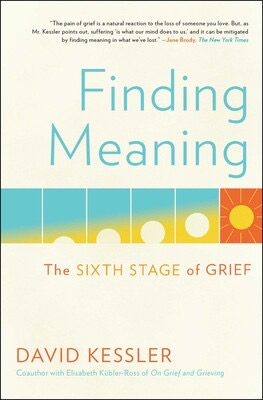

 weirdness) of it was that focusing on the fascicles made it impossible for me to turn the class into “all of Bethany’s favorite E. D. poems.” In each class I asked, “What caught your eye? What do you want to bring to our attention?” As a result, we put a microscope to poems I’ve barely given a glance in the past. And everything we picked up gave us so much to talk about. It was ideal.

