What I’ve Been Reading…

I have been reading two books that “talk” to each other. Each of the authors is learned in his or her field, witty and charming, a good storyteller. Sometimes, when I’m quiet and listen carefully enough, they break through the walls of the resistance I’ve been feeling lately (about my own writing, about my mother’s journey) and I learn something that I can’t quite pin on either author. It’s something that emerges from the conversation.

The books are THE POWER OF DREAMS by Jeffie Pike and OUR GREATEST GIFT by Henri Nouwen. Subtitles: How an American Quarter Horse Impacted the Life of an Aspiring Grand Prix Dressage Rider, and A Meditation on Dying and Caring. Both books are quite short and both are full of wisdom. Other than that, most readers, I think, would not see that they share much in common. Nouwen is a well-known writer and spiritual philosopher, widely published. Pike is an accountant, blogger, and horse enthusiast who lives in northwest Washington State. She is also the daughter of a friend of mine.

One of the things the books are saying has to do with how our passions define us. Nouwen’s fascination with the soul and the soul’s journey drew him into caring for the sick and dying.Pike begins her narrative with this revelation: “I’ve loved horses my entire life. I think it must be something that you’re born with. I remember very clearly sitting in an ice cream shop when I was 6 years old and for some reason a very strong thought popped into my head—you love horses. Ever since that time, my life has revolved around them.”

These books have much to say about how our relationships define us. Pike is writing about an American Quarterhorse named Justine; her subtitle gives away that this little mare defied classifications and competed with bigger, more elegant horses , but—perhaps more important—Justine taught the author how to, well, relax and enjoy the ride. Nouwen begins his book with a personal story about a friend with Down’s Syndrome, Maurice Gould (Moe), who, as he aged, developed Alzheimer’s. Justine taught her owner how to live; Moe taught his friend Henri how to die. But they turn out to be the same thing.

Jeffie Pike was obsessed with the German Warmbloods who she typically competed with in dressage. She had enjoyed Justine, who came to her by a happy accident, and when she decided she didn’t have enough room or time in her life for her, went to considerable trouble to find her a new home. When she learned that Justine wasn’t valued by her new owner, Pike went to great lengths, again, to get her back, overcoming financial and geographical difficulties. “How much sense did it make?” she asks more than once. What made sense was that she loved Justine and cared for her deeply, and, as it turned out, that was enough.

Nouwen teaches the same lesson on the human plane: love is always enough. We are not valuable because we are a certain height, or have eyes of a particular color. We are not valuable because we graduated from a certain Ivy League institution, or because of anything we, personally, do or can do. We’re valuable because we are beloved children of God.
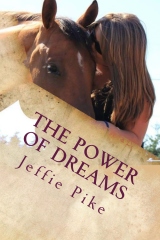
One of the features I loved about THE POWER OF DREAMS are the chapter epigraphs, which Pike draws from Temple Grandin, Robert Greene, basketball coach John Wooden, and Star Trek. Again, I found numerous intersections to Nouwen’s insights. “It is possible to commit no errors and still lose. That is not a weakness. That is life” (Captain Picard to Data, Star Trek: The Next Generation, “Peak Performance”). As Nouwen might put it: “The mystery of life is that we discover this human togetherness not when we are powerful and strong, but when we are vulnerable and weak.”

Late in her book, Pike offers a quote that I, on coming across it, immediately wrote down in my journal: “Your fears are a kind of prison that confines you within a limited range of action. The less you fear, the more power you will have and the more fully you will live” (Robert Greene, The Fiftieth Law). While reading both of these books I thought, often, of the prodigal son; I thought, too, of his older brother who doesn’t understand why their father welcomes the errant son home. (I am still thinking about this.)

THE POWER OF DREAMS and OUR GREATEST GIFT also reminded me of something I’ve read about the bumblebee, that, aerodynamically speaking, it should not be able to fly. But no one has ever told the bumblebee this, so it flies.

My summer of ______________________.

from The Pen and the Bell

As Robert Vivian said in his book The Dignity of Crumbs: “The strings tying us to each other are everywhere.” This sentiment becomes more obvious when in the presence of birth or death, when all the portals are open. – See more at: http://www.penandbell.com/writing-practice/#sthash.8TlEYC11.dpuf

I subscribe to The Pen and the Bell, a website (and a splendid book) maintained by poet Holly Hughes and essayist Brenda Miller. As you will see if you drop by there, Brenda recently fostered a young dog who gifted her summer with puppies.  Each letter from Hughes and Miller ends with a writing challenge, and this one was to write for 15 minutes on “My summer of ____________.

The Summer of my Mother’s Stroke

This was, for me, the summer of my mother’s stroke. On July 6, a Sunday, I drove from my home in Edmonds to see Mom in Chehalis and found her not feeling well. It was a record warm day and I thought it might be just the heat. We had planned to go out for dinner; I suggested that she put her feet up, and I go find us some dinner, but she said Nothing doing. She insisted on having our dinner out, one of her great pleasures in life.

Dinner didn’t go well. She did not have as much appetite as usual and, uncharacteristically, spilled food all down the front of her shirt. I finally got her home. I set up the DVD player and put in an episode of Monk to watch (another of Mom’s pleasures being television mysteries). A few minutes into the program she was in distress. She began slurring her words. Her mouth tugged to the left. I said I would call 911 and she insisted that I would not. Well, Mom has always been the boss. After calling my sister, I decided that I couldn’t let Mom call the shots on this one. I got her out to the car and drove to the ER in Centralia. By the time we arrived, however, Mom was 100% recovered. As we talked to the admitting nurse, I felt as though he thought I had made the whole thing up.

So why didn’t we get to go home? It was one o’clock in the morning–MRI, observation–waiting and waiting–before a doctor  sat down with us and explained how TIAs work (Transient Ischemic Attack). I hadn’t imagined the whole thing, and Mom wasn’t going to be sent home. Big strokes often follow a TIA, the doctor explained, but if they could get to the bottom of what caused this one, they could prevent further damages.

Long story short, Mom was put on a blood-thinner, discharged after two days, and back at home (my sister was with her, fortunately), she fell and hit her head. Back to the hospital, she was immediately taken off the blood-thinner, and then, on Thursday morning, she had a major stroke which paralyzed her left side and left her (us, too), reeling mentally. We thought we would lose her then and there. My brother and sister who live farther afield came, and many of Mom’s grandchildren, too. But after a few days in the hospital she was well enough to be discharged into a skilled nursing facility.

Four weeks later, despite physical therapy, Mom remains much the same. She no longer enjoys eating, though she will eat a few bites at each meal. She no longer seems able to concentrate on television. But she has good days as well as bad. Her children have tried to keep her company and she always knows us. She lights up when her grandchildren come. I’ve driven to Olympia (to the skilled nursing and rehab) two to three times each week, often staying overnight in Mom’s apartment so I can see her two days in a row. One of our jobs this summer has, however, been to clean out the apartment (finally accomplished completely as of this past Monday).

Two days ago we moved Mom to an Adult Family Home near my sister’s house on Hood Canal. As the lead caregiver there explained, for Mom, it was like moving from one world to another, and of course it was further disorienting. But they promise that they can deal with whatever Mom brings with her (a catheter for instance and the complete lack of mobility). It’s a large but homelike setting and we love the staff. It is a few minutes from my sister, and (if I catch the ferry at the best of times) only an hour’s drive for me. We are hopeful that this idyllic spot (with deer grazing on the lawn outside and woodpeckers in the trees) will continue to attract visits from grandchildren and from Mom’s nieces and sisters.

In Brenda’s letter she frames her writing challenge with these words:

So, for me, this summer will always be known as the “summer of puppies.” What name would your summer have, if you could name it? What has marked the season? Have you been able to take a real break from your “ordinary life?”

In this article from the NY Times, author Daniel Levitin writes about the importance of hitting the “reset button” in our brains, in whatever ways that might manifest. It doesn’t have to be as dramatic as a herd of puppies yapping for your attention. It can be as simple as absorbing yourself even for just a few minutes a day in something you love—a book, a craft, a special picnic breakfast outside.

Write for 15 minutes starting with the title “My Summer of _______. ” Capture on paper whatever has been capturing you.

I have had moments, even this summer, when I hit the reset button. Walks with our dog, with one of my daughters and our dog. garden gateReading aloud from an Agatha Christie novel to mom (she napped, but Mom’s roommate enjoyed it and so did I). Watching Mom with her grandchildren. Watching my nephew brush her hair. Spending time with my niece from Arizona and my nephew from D.C. (as well as the ones from Idaho–all visits MUCH appreciated). Sitting at a coffee place in Du Pont or Federal Way (which I did frequently) and writing in my journal. Meeting my friends to write at the public library in Everett or at Caffe Ladro in Edmonds. Kayaking with my sister. Camping at Twanoh State Park with my girls.

Mom isn’t dying, not right now. But this summer with her health issues has, indeed, been a moment in time when, as Brenda put it, all the portals were open.

So what name would your summer have, it you were to name it?

Me and My Inertia…

“If you want to write, you can. Fear stops most people from writing, not lack of talent, whatever that is. Who am I? What right have I to speak? Who will listen to me if I do? You’re a human being, with a unique story to tell, and you have every right. If you speak with passion, many of us will listen. We need stories to live, all of us. We live by story. Yours enlarges the circle.” ― Richard Rhodes

I’d like to say that it’s fear that stops me from writing. Fear sounds so BIG, so sort of cool. Oooh, I caaann’t! I’m afraaaid! I can pretend I’m that cute girl in the scary movie, the one running through the forest in high heels. Epic fear.

But I’m not really sure that it’s fear that gets in my way. Vague, incoherent fears perhaps underlie my awesome ability to procrastinate, my inspiring lack of the ability to prioritize, my death-defying grip on inertia. But what if it’s just inertia?

And this, of course (I admit), from someone who does get quite a bit of writing done. Feeling overwhelmed by life and its demands this summer, however, I have not been getting writing done. Which is not to say I haven’t read 30 novels and played many, many games of Spider Solitaire.

At the end of my life, I don’t want to see a ledger with one side all weighted down with great TV shows, great novels, and great card games. I’m not alone here (I’m pretty sure, as I have also been closely observing three 21-year-old women all summer). So, how many hours do you spend watching television or playing games on your very-smart cell phone — or both?

At the end of your life do you want to say, I meant to … fill in the blank with whatever it is for you (get healthy, quit smoking, lose weight, spend a summer on a sailboat, learn to play the piano, write a book)? Wouldn’t it be cool if you could say you’ve done those things? Were you afraid to do them, or did you just never get started? Getting started is easy, and you can practice getting started, every day, even if all you have is 5 minutes or (my favorite) 15…

I know, I know, when you’re overwhelmed with life, changing your life does not feel like an easy thing. What’s that old saying? When you’re up to your neck in alligators it’s hard to remember that your job was to drain the swamp.

It’s time for me to reread Virginia Valian’s essay, “Learning to Work,” which is, courtesy of Theo Pauline Nestor, available on-line, here: http://writingismydrink.com/learning-to-work/

Reading List…

trees3One of the things I do lately is drive from my home in Edmonds, north of Seattle, to Olympia, to Chehalis, to Olympia, and home again. One of the things I do when I drive is schlep books around. One of the books I’ve been schlepping around (schlepping? is that right?) is Christina Baldwin’s Life’s Companion.  Here’s a passage I copied out in my own notebook (in it, she discusses the work of John Brantner, a professor at the University of Minnesota):

“Even though we have been told by saints and sages that there is a dark night, that we will lose ourselves in the woods, we may still be shocked and surprised to find ourselves there. It is part of human nature to hope that spirituality will save us from the experience, that we can combine enough luck and faith not to suffer.

“In Brantner’s worldview, not only is this not possible, it’s not desirable. He defined despair as an integral part of human maturity, an avenue of learning that should not be avoided….Despair is such a nearly universal experience among people who have chosen consciousness that you and I would do well to accept it, name it, and prepare ourselves as willingly as possible to submit to the process. ” (93)

Then, from Madeleine L’Engle, this:P1050357

“The world tempts us to draw back, tempts us to believe we will not have to take this test. We are tempted to try to avoid not only our own suffering but also that of our fellow human beings, the suffering of the world, which is part of our own suffering. But if we draw back from it…, [Franz] Kafka reminds us that ‘it may be that this very holding back is the one evil you could have avoided.’

“The artist cannot hold back; it is impossible, because writing, or any other discipline of art, involves participation in suffering, in the ills and the occasional stabbing joys that come from being part of the human drama.” (Walking on Water68-69)