Jane Alynn, NECESSITY OF FLIGHT
NECESSITY OF FLIGHT, Jane Alynn, Cherry Grove Collections, 2011.
As planned, I am spending my April reading poetry, though some mornings a blogpost feels out of reach. This book,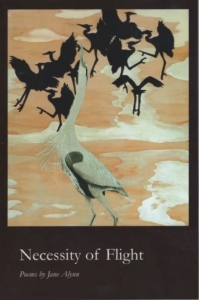 not new, but a fairly recent addition to my book hoard, is one I definitely want to share.
Necessity of Flight is a showcase for its author’s craft. Jane Alynn is also a photographer (see her website for a sampling), and these poems are filled with images and light. To quote the back cover blurb from Lana Hechtman Ayers, at the heart of this book is “a profound reverence for and kinship with the natural world.”
I heard Jane read at Edmonds Bookshop about a year ago, and I can still hear her reading this poem:
In Want of Wings
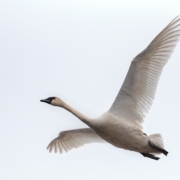
The trumpeter swans are standing in the field
alongside the road. White, outsized, magnificent.
Suddenly, agitated by something, these birds take off
running, their bodies remembering the risk to living
in the open. The mass as it moves for flight stops all song.
The swans face the wind with wide-stretched wings,
arcs of luminosity, lifting their heavy bodies skyward.
Filled with awe, I watch them
until I am looking only at the distance.
And I think of things that make us disappear,
what harm the fowlers do. When I have wanted
wings. A child launched into darkness dreams
of human flight not forbidden, being borne
swiftly on a rush of wind, those miraculous pinions
in perfect rhythm of progression, blood feeding feathers,
wings pumping, breastbone heaving, breathing
easier when she comes to a sweet end,
having brought herself from the brink of extinction.—Jane Alynn
Necessity of Flight is alive with wings, “cloudburst / of starlings”; hummingbirds “keen on honeysuckle”; “feathered beggars”; a gull, “dull and brassy and fat / as a wallet on payday, / swelled with longing.” Dreams and memories are longing, too, and almost fly, long-deceased loved ones passing through, and everywhere the rising of the poet’s words from line to line and page to page.
You can visit Alynn’s website to learn more. It’s worth the trip.

 poetry presses: MoonPath Press, Concrete Wolf Poetry Series, and World Enough Writers. She also leads generative workshops, helps people assemble their books of poems, teaches at conferences, and writes her own poetry. To borrow the phrasing from the end of her poem, “A Blue True Dream,” her writing mantra must be “yes and yes and / illimitably yes.”

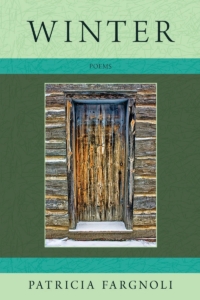 for her. Winter, the sixth volume in the Hobblebush Granite State Poetry Series, was the first to arrive, and is now on sale for $9 at Hobblebush Books (use this link: