
Caitlin Dwyer, IN THE SALT
IN THE SALT, Caitlin Dwyer, MoonPath Press, 2026.
Winner of the 2025 Sally Albiso Award
How much more praise can I lavish on this quirky, brilliant collection of poems? The book is woven of two main 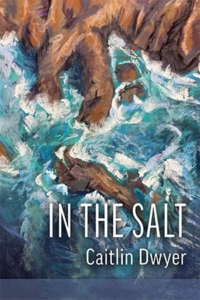 strands: the female characters of Homer’s Odyssey, and the story of the birth and imperiled early life of Dwyer’s son, Quinn, to whom the book is dedicated. The book is woven of dreams, myths, nightmares, and hope. In a way the book is about weaving, and it is Penelope working at her loom that makes this theme clear. She weaves cloth (unweaving it each night, if you’re unfamiliar), as she fends off suitors, longs for her husband’s return, and watches her son grow up.
Strategies I found effective in making the whole coherent were Penelope’s dream sequences of untitled poems; and the several poems titled “Waste Thread” that are scattered throughout, like wasted threads on the floor under a loom. Some of these are short as two lines, but here’s a longer example:
Waste Thread
Silver-tipped rhododendrons.
Lichen-speckled bark.
I close my eyes and dream of rain, wake
and dream of rain. My eyes blur
when I try to focus. When I gaze out
of my eyes and not my head, I feel alive.
Nose in the wet soil. Songs of worm-trace
and limestone, shell-break, calcium pulver.
Phlox in the cracks. I close my eyes
and sugar-syrup coats my tongue, crystallized
honey cracked against a bad tooth.—Caitlin Dwyer
Sometimes (often) the lines blur. Is this Penelope, wasting threads, or is this our poet?
Waste Thread
Buddha says we are all capable of waking up.
The human mind is nothing but sky-flowers.
Cataracts, clouds. Perhaps because I value the body
that made him, I cannot see my son clearly;
he dashes this way and that, wet petals, blur.—Caitlin Dwyer
The final poem, “Song to Call a Body from the Salt,” begins—
Do you recognize the constellations yet?
The bear, the cored apple, the crab? The mother
with her hands full of stars
—and what I notice here is not only the lovely enjambment of the second line into the third, but also an education in progress. A mother, teaching her son about the constellations; a mother, learning to be present with your young son; and the poet, schooling us on her art.
Visit Dwyer’s website to find more poems from the book (including “Changeling,” one of my favorites). You can order a copy from MoonPath Press, or your local independent bookshop.







Leave a Reply
Want to join the discussion?Feel free to contribute!