Where You’ll Find Me
On my to-do list for today is “write blog post.” So, here goes. What I’ve been up to, and a little of everything else.
I have finished my poetry manuscript. “Finished”? I finished it last April, too, and sent it out, then withdrew it from several contests. I couldn’t say why it didn’t feel ready, it simply didn’t.
A friend suggested that I not think globally, condemning the entire ms, but to instead focus on individual poems. What I actually did was ignore it. I took a class. I worked on my send-out practice. I (finally) returned to my mystery novel. Then, in October, I finished the rewrite of the mystery.
And the poems were still sitting there, muddy and neglected, their unwashed faces looking up at me.
I again found useful distractions. A short story re-write, notably. Then, I broke my arm and was unable to type.
I had been fantasizing about a writer’s retreat, or just a week anywhere in an Air BnB alone with my story and…maybe…my poems. With the retreat option off the table, I made a decision to resort to my practice from when my three daughters were small and writing felt like an edifice without a door, impossible.
I would sit with my poems for 15 minutes every morning.
Even in that first awful week with the immobilizing splint, when I couldn’t type, I could page through poems and reread them. I could mark them up and scribble revisions. After a day or two, I began setting my timer for 25 minutes-on / 5 minutes-off (the Pomodoro method) and I often found myself putting in an hour or two.
Every. Morning.
Even Christmas Eve. Even Christmas Day. If I didn’t break through to the hours, I at least set my timer and did the 25  minutes.
Last summer — while working on the novel — I gave up some time-wasting habits (TV on my iPhone; Spider Solitaire, which is my crack cocaine; listening to audio books). Or, I mostly gave them up. While working on the poems, and perhaps feeling sorry for my poor broken self, I slid back into all these habits. It took several weeks before I recognized I was self-medicating.
During my halcyon months on the novel, I had hit on a method of reworking a chapter, then recording it, sending it to my phone, and listening to that (instead of an audio book by anyone else) on my walks. This was genius, by the way. I don’t know if it will work for you, but it was a huge breakthrough for me.
At some point early in January it dawned on me that I could record the poems — especially the most troublesome ones — and listen to them while I walked. Again, big breakthrough. I was almost … there.
Then, sometime in the last week or so I found myself back at that edifice — the big, blank, doorless one.
Perhaps I shouldn’t admit this, but it felt as though I wasn’t at the foot of a blank wall, but stuck up high, poised to jump. It was despair. The poetry book — which is about the extremely emotional topic of my childhood on a farm, my parents’ deaths, the loss of the farm — would never be done. I was trapped. The book would never be good enough. I would never be that person, that writer, who can do my story justice. Then, like someone waking up from a bad dream, I recognized where I was and I knew I had been there before.
In the past, whenever I felt this sort of despair over a writing project, I floundered around searching for someone to save me, maybe a whole committee — my steering committee — some august body to weigh in with all their considerable authority and tell me what to do.
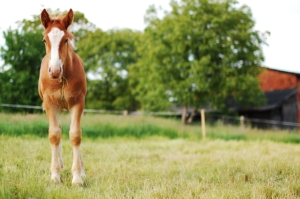 I woke up one night — from a dream? into a memory? — of sitting in the hayfield beside our barn, and watching a foal die. (“A” foal? The foal, Brandy’s foal.) I experienced exactly what Bessel Van Der Kolk describes in his book, The Body Keeps the Score. I wasn’t remembering it, I was living it. My heart was pounding. I was wide awake, terrified, horrified. I could see my uncle’s face, hear his voice: “That mare has plenty of milk.” I could not just see him turning to walk away, I could feel him walking away from me. I could feel my own words stuck in my throat, choking me.
I am strongly considering not posting any of this.
In essence, in my pit of despair with the poetry manuscript, I saw that I needed what I needed when I was a kid on a farm — what I wasn’t able to do when I was that skinny, freckled girl who couldn’t or wouldn’t speak up and insist on her own voice, her own truth.
I needed to listen to my own counsel.
That foal was not the only loss I’ve experienced in my life, and I’ve often tried to deny its importance. But the truth is it was important, and early, a preface to adulthood and adult cares. It changed who I was, who I would grow up to become. I’ve written this story before — in poetry and prose — and sometimes I think I will never be finished writing it. The foal is (perhaps strangely) absent from this new book. In short: including her this time around seemed to tip the book over and unbalance it. Even so, whenever I fall back into this visceral memory, I know that I’m being asked to wake up to some reality and, well, own it. I am being asked to speak up.
Is the poetry manuscript now perfect? No, not even close. But it has reached a point where I’m pleased with it, where it feels possible to share it. It is out to four contests, and I have a spread sheet with several more to send to as they open and deadlines loom.
I had planned to say more — maybe something about how AI apps can’t write with your peculiar history, your emotional depth, or your brilliant sarcastic humor. I had meant to share a poem. But — for today — I think this is enough.
So that, my friends, is where you’ll find me.

 Linda Pastan just put out a new and selected poems, Almost an Elegy, at age 90. A great website for you to investigate further is
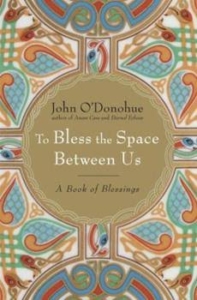
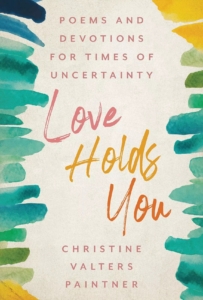 listen).
 But I promised myself I would do an end-of-the year round up of my submissions, and I’m not going to let my arm stop me.
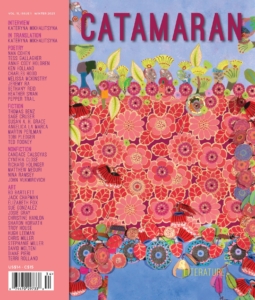 Of course it’s way more fun to look at the acceptances. I’ve shared a few of these over the year, but recently the mail brought my contributor copy of
  appreciate all the on-line journals now encouraging writers, but it’s still a treat to get a copy of a real, flesh-and-bone journal.