
Natalie Diaz, Postcolonial Love Poem
POSTCOLONIAL LOVE POEM, Natalie Diaz. Graywolf Press, 250 Third Avenue North, Suite 600, Minneapolis, MN 55401, 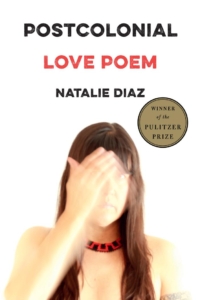 2020, 105 pages, $16.00 paper, www.graywolfpress.org.
In these astonishing poems and prose pieces, Natalie Diaz spins herself out of river water and dust. Reading this book, all the way through, this morning, taught me that I am going to have to find more ways to say “Amazed.” It’s a gift, but a living one like a rooster or a baby—or a knife to your throat. It wakes you up and makes you look at things you didn’t want to see, things you’ve studiously avoided.
Diaz has won numerous awards, including the Pulitzer Prize for Postcolonial Love Poem. Here’s a sample of the buzz from a 2020 review in The Guardian:
Natalie Diaz’s second poetry collection – up for this year’s Forward prize – opens with its title poem, in which past and present blur in an eternal conflict. “The war never ended and somehow begins again,” she declares. Diaz, a US-based poet and MacArthur “genius grant” winner, identifies as queer, Mojave, Latinx, and an enrolled member of the Gila River Indian tribe. In the US, she is, as the minotaur in her poem “I, Minotaur” suggests, “citizen of what savages” her. To be savaged is to be brutalised by her nation, but also lurking beneath the verb is the savage, a slur for indigenous people. —Emily Peréz
Diaz is “a language activist” and dusts the English of her poems with Spanish and Mojave words. This book is a protest poem—see “The First Water Is the Body”—and it’s a celebration and a lament of place and family and identity, also sex and basketball. It blows my mind.
Here’s the title poem:
Postcolonial Love Poem
I’ve been taught bloodstones can cure a snakebite,
can stop the bleeding—most people forgot this
when the war ended. The war ended
depending on which war you mean: those we started,
before those, millennia ago and onward,
those which started me, which I lost and won—
these ever-blooming wounds.
I was built by wage. So I wage love and worse—
always another campaign to march across
a desert night for the cannon flash of your pale skin
settling in a silver lagoon of smoke at your breast.
I dismount my dark horse, bend to you there, deliver you
the hard pull of all my thirsts—
I learned Drink in a country of drought.
We pleasure to hurt, leave marks
the size of stones—each a cabochon polished
by our mouths. I, your lapidary, your lapidary wheel
turning—green mottled red—
the jaspers of our desires.
There are wildflowers in my desert
which take up to twenty years to bloom.
The seeds sleep like geodes beneath hot feldspar sand
until a flash flood bolts the arroyo, lifting them
in its copper current, opens them with memory—
they remember what their god whispered
into their ribs: Wake up and ache for your life.
Where your hands have been are diamonds
on my shoulders, down my back, thighs—
I am your culebra.
I am in the dirt for you.
Your hips are quartz-light and dangerous,
two rose-horned rams ascending a soft desert wash
before the November sky untethers a hundred-year flood—
the desert returned suddenly to its ancient sea.
Arise the wild heliotrope, scorpion weed,
blue phacelia which hold purple the way a throat can hold
the shape of any great hand—
Great hands is what she called mine.
The rain will eventually come, or not.
Until then, we touch our bodies like wounds—
the war never ended and somehow begins again.—Natalie Diaz
Diaz’s notes and epigraphs are an education in themselves, by the way. And one of the epigraphs in this book is from Hortense Spillers, someone I read in graduate school and when I was writing my dissertation on American (literary) illegitimacy:
“My country needs me, and if I were not here, I would have to be invented.”
–Hortense Spillers, “Mama’s Baby, Papa’s Maybe: An American Grammar Book”
Natalie Diaz is needed in just that essential and gut-wrenching way. She should be required reading.
You can read more by clicking her name at the top, or going to Academy of American Poets.
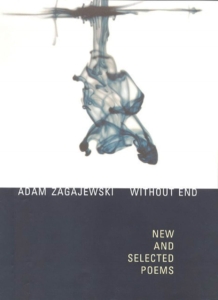 numerous times from my local library, was Adam Zagajewski’s Without End. No, I did not read the entire book this morning, but, hearing the Ukrainian president
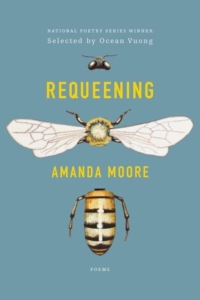 Beekeeping with its queen is the metaphor binding the book together as the poems chronicle motherhood, the eventual disrupting flight of a daughter, the death of a parent. Teaching The Odyssey to high-schoolers. Cancer. Death. All housekeeping, finally. Always disequilibrium.