Two books by Lillo Way

LEND ME YOUR WINGS, Lillo Way, Shanti Arts Publishing, 2021.

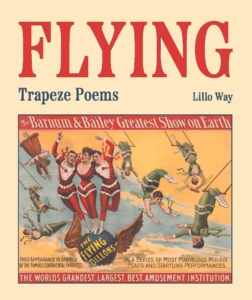
FLYING, TRAPEZE POEMS, Lillo Way, Redbird Chapbooks, 2024.

Before Lisa Ashley invited me to read with her and Lillo Way, last fall at Eagle Harbor Books, I had heard of Lillo, but had not had the privilege of meeting her or reading her work.
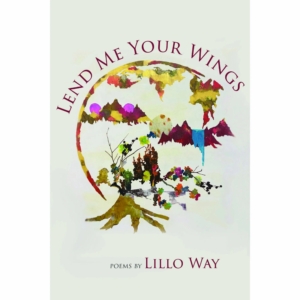
Lillo is named after her grandmother, stage-name Lillo Dillon (1875-1939), a trapeze artist—in a family billed as the “The Flying Dillons, Demons of the Air”—with Barnum & Bailey. The 22 poems of Flying illustrate—illuminate—the original Lillo’s life: “trained to fly,” and first put on a tight rope at age four. It’s a story that of course a granddaughter would catch onto (and no matter how her mother tried to ground her). Of course Lillo Way’s personal history is filled with acting, dancing, and choreography. And award-winning poems.

In Lend Me Your Wings the grandmother’s story also appears, but in every poem in the collection (over 100 pages), flight is interwoven with fancy. I love the sound work in these poems, and the specificity. A half-moon is framed by a window, “mullioned and muntined.” Even a poem about snoring is staged: “A bulldozer of sound. A demolition derby.” Nothing, in Lillo Way’s hands, feels ordinary. Rain in Porticello is “knives and forks frogs and ropes / halyards halberds cords and threads,” “all spangle-bangled” and falling. Clothes are tasseled and sequined, and so is memory. A performance.

Here’s one short poem to show you what I mean:

Starlets

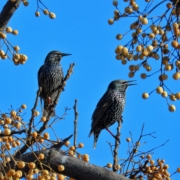
Eighteen starlings strung along a power cable.
Sunlings, really—day birds—shining blacker
than night in the light of the longest day,
all watching the same direction, as if danger
couldn’t possibly approach from tailward.
A chorus line in a shallow proscenium theater,
each chorine staring straight downstage,
world’s shortest-legged Rockettes,
shuffling a little up or down the line.
You figure it’s the best they can do,
forgetting that their dance is all pent-up,
waiting, in the wings.

They leave the high-wire dance floor in a fugue.
A crowd of crows bursts into raucous cheers.

—Lillo Way

Having read Flying, this poem makes me think of “The Glamorous Life,” where the original Lillo shares housing with other single female performers, their half-dozen languages, their raucous laughter. Ellen Bass calls Lend Me Your Wings, “a celebration and joy,” an apt description for all of Lillo’s poems, packed tight with what lifts us: trapeze arts, beauty, dance, fire, wings, song. I invite you to take a deeper dive by visiting Lillo’s website, https://www.lilloway.com.
Michael Daley, GROUND WORK

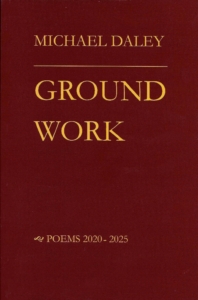
GROUND WORK: POEMS 2020-2025, Michael Daley, Ravenna Press 2025

It’s my pleasure today to share a poem from Michael Daley’s newest book, Ground Work. My full review appears in the current print edition of Rain Taxi, and you can learn more about Michael by visiting his page at Empty Bowl, or Poets & Writers. (My on-line search for sites to share with you yielded numerous Michael Daley interviews, poems, and recordings.)

I love this poem (below) because I, of late, have been in danger of being buried in the bottom of a toolbox. House projects began piling up in December—new gutters turned into a new roof, delayed and expanded by the discovery of rotted roof struts; new flooring because of the damaged carpets revealed a leak in the kitchen, a subfloor that had to be replaced, then the perhaps stupid choice to go for a whole new kitchen; and did I mention the doors, the windows?—suffice to say we are not yet at the end. (Though now when things come up I am learning to say, “That’s a 2027 problem.”)

Rereading Michael’s poems about work, and about failed work, gives me heart.

On the Gift of Yet Another Torn Cardboard Box of the Late Great Master Poet’s Letters

For Fred Manvellor

Maybe fifty years from now, some kid mechanic
desperate to locate a caulking gun or jigsaw blade
inside a greased box labeled “finest bourbons”—
under a cache of stripped screws, bent brads,
cigarette butts, garage soot, crumpled bloodied toilet tissue—
might uncover such a trove of my own unread sketches, unsent letters,
drafts of failed poems, and dreams—if I’m lucky.

—Michael Daley, Ground Work

Nina Burokas, in her Raven Chronicles review, calls the poems of Ground Work, “incantatory,” and adds a timely reminder (for me) that all work (house repairs as well as the writing or poetry reviews) is prayer.

Michael Daley is truly a northwest treasure and I invite you to take a deeper look.

Sandra Yannone’s BOATS FOR WOMEN

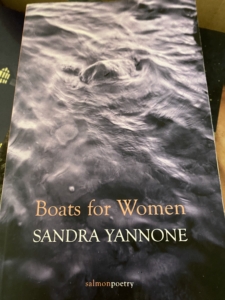
BOATS FOR WOMEN, Sandra Yannone, Salmon Poetry, 2019.

If you don’t know Sandra Yannone, I am here to tell you, you really should. In addition to being Poet Laureate of her hometown, Old Saybrook, Connecticut, consider this impressive list of activities from her website:

She is co-founder and host of Cultivating Voices LIVE Poetry, an international, intersectional, intergenerational poetry group and reading series. In addition, Sandy hosts Last Tuesdays with Sandy & Thomas, a special monthly online reading event for Olympia Poetry Network subscribers, and co-hosts the West-East Bicoastal Poets of the Pandemic & Beyondonline reading series. Previous hosting and co-hosting appearances include The Collectibles Lesbian Trading Card Reading Series with Headmistress Press, and as the featured poet and collaborator on the Little Oracles: Divinations podcast miniseries.

I met up with Sandy at my June reading for Olympia Poetry Network, and we exchanged books. Her Boats for Women witnesses the sinking of the R.M.S. Titanic, rides along with Houdini’s wife, and dramatizes what it looks like to survive one’s own raucous and wild choices.
The title poem, a prose poem, marries marine history with personal history, capturing all the themes of the book—“Silence. Disaster. Desire. Hope. These cardinal directions…” Notice the anaphora (the repetition of a word at the beginning of clauses) of yes, yes, yes running all the way through the poem.

Boats for Women

Yes, the boat sank. Yes, it broke in two like a stereotypical
broken heart before it plummeted to depths no one could measure
until seventy years later technology caught up and looked its
ancestor in the face. Yes is the way the years oxidize the steel,
and yes wipes the name Titanic off the bow. Yes are the lifeboats,
the davits, the call for women and children first. Yes are the men
who cry from the decks. Sometimes when I kiss her, I am
leaving a yes on her lips to remind her that I will go down
with the ship. Sometimes when she whispers yes, she is staying
on board. But there is always room on the lifeboats for two
more women. Yes is the fact that if we were alive on that
night, we would have lived.

—Sandra Yannone

If you are writing a poem a day during National Poetry Month, Sandy’s “Some Talk About Rain” suggests a good prompt. (And, yes, it is raining today in the Pacific Northwest with a 100% chance of rain.) It begins: “We were in the soggy middle again and in between / she was talking about the rain, remembering / how it rained…” A few lines later: “how we would spill / wet against the bricks, sequined trails / / rushing ahead…” Are we talking about rain or about relationships or a hike, or all three? The imagery and chimed sounds (notice the plosive sounds: weT againsT the briCKs, seQuined) here, and throughout the collection suggest, definitely, the glad all of it.

To learn more about the poet, visit her website, https://www.sandrayannone.com, where you’ll also find links to her on-line events, and for purchase of her books.

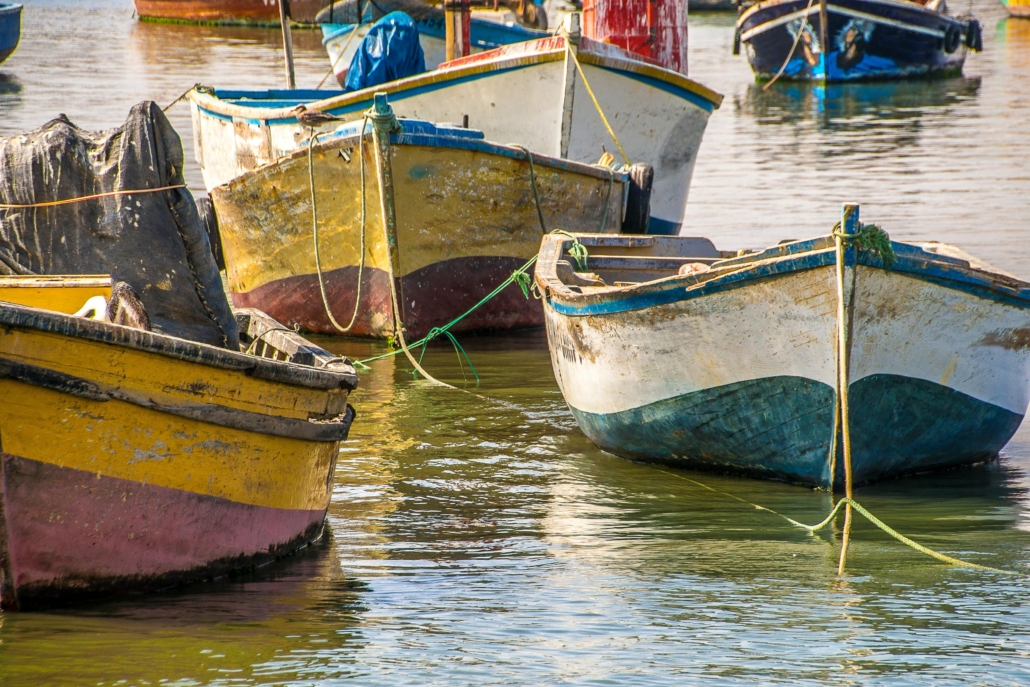
Photo from PEXELS, by Mike van Schoonderwalt: https://www.pexels.com/photo/fishing-boats-on-water-5502827/


Chris Dahl’s NOT NOW BUT SOON

I’m pleased to let you know that my review of Chris Dahl’s Not Now But Soon, winner of the 2025 Concrete Wolf Louis Award, is now posted at Escape Into Life. (Be sure to explore the links!) Chris is one of the mainstays of Olympia Poetry Network (OPN); no matter where you live, they welcome new members, and have terrific Zoom readings in addition to their in-person readings and workshops.

I wanted to share a full-length poem here, and as I happen to also be reading The Gentle Art of Swedish Death Cleaning, by Margareta Magnusson, this poem especially appealed to me. It’s perfect for this dark time of year (sunset today at 4:19 p.m.).

Aware of the Season’s Pivot

We come to the time of the year when we wake in the dark.
No shine appears on the water; the surface smothers
any reflection. We have lost our easy ways
of gauging depth.

Some years, when I head south I have asked my mother
to take my orchids for the winter. They’re a gift—
she could keep them, but she always gives them back,
afraid they’ll die. When I return, I take them home
and immediately they bloom. If only she would wait
for the cycle to complete.

Now, at her house, we talk in whispers. She’s already
organized her files and affairs, insistent
she can take care of things, even after she’s gone.
I’m all worn out with worry, she says. Now
I’m the one without faith
that the cycle will continue.

Yesterday I took the wilted flowers from the funeral
bouquet and rearranged what was left. Amazing how
certain species go on delighting with their fragile beauty,
alstroemerias, and even some chrysanthemums,
challenging us to find the language
that describes the pull of time, its
relentless gravity.

These are night thoughts, of course, but then
we have so much more night, now.

—Chris Dahl

Photo by Hiếu Hoàng: https://www.pexels.com/photo/purple-and-pink-moth-orchids-closeup-photo-1038003/