Chris Dahl’s NOT NOW BUT SOON

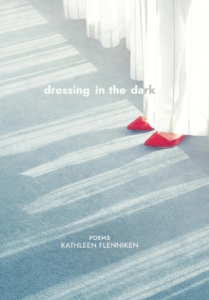
I’m pleased to let you know that my review of Chris Dahl’s Not Now But Soon, winner of the 2025 Concrete Wolf Louis Award, is now posted at Escape Into Life. (Be sure to explore the links!) Chris is one of the mainstays of Olympia Poetry Network (OPN); no matter where you live, they welcome new members, and have terrific Zoom readings in addition to their in-person readings and workshops.

I wanted to share a full-length poem here, and as I happen to also be reading The Gentle Art of Swedish Death Cleaning, by Margareta Magnusson, this poem especially appealed to me. It’s perfect for this dark time of year (sunset today at 4:19 p.m.).

Aware of the Season’s Pivot

We come to the time of the year when we wake in the dark.
No shine appears on the water; the surface smothers
any reflection. We have lost our easy ways
of gauging depth.

Some years, when I head south I have asked my mother
to take my orchids for the winter. They’re a gift—
she could keep them, but she always gives them back,
afraid they’ll die. When I return, I take them home
and immediately they bloom. If only she would wait
for the cycle to complete.

Now, at her house, we talk in whispers. She’s already
organized her files and affairs, insistent
she can take care of things, even after she’s gone.
I’m all worn out with worry, she says. Now
I’m the one without faith
that the cycle will continue.

Yesterday I took the wilted flowers from the funeral
bouquet and rearranged what was left. Amazing how
certain species go on delighting with their fragile beauty,
alstroemerias, and even some chrysanthemums,
challenging us to find the language
that describes the pull of time, its
relentless gravity.

These are night thoughts, of course, but then
we have so much more night, now.

—Chris Dahl

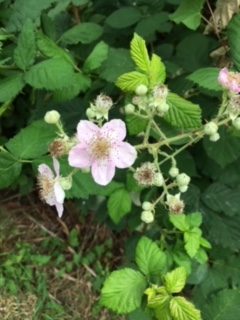
Photo by Hiếu Hoàng: https://www.pexels.com/photo/purple-and-pink-moth-orchids-closeup-photo-1038003/

The Autobiography of Rain

THE AUTOBIOGRAPHY OF RAIN, Lana Hechtman Ayers. Fernwood Press, 2024.

Lana Hechtman Ayers is a one-woman poetry dynamo. She is the managing editor of three Pacific Northwest poetry presses: MoonPath Press, Concrete Wolf Poetry Series, and World Enough Writers. She also leads generative workshops, helps people assemble their books of poems, teaches at conferences, and writes her own poetry. To borrow the phrasing from the end of her poem, “A Blue True Dream,” her writing mantra must be “yes and yes and / illimitably yes.”  

In The Autobiography of Rain, her eleventh and most recent collection of poems, rain patters, welcome, relieving. “The rain is my best friend,” she writes in “Nineteen Things No One Knows about Me (And One They Do)”: “She knows how to keep a secret / and wash away the evidence.” Humor, sometimes, but rain also shows up hand-in-hand with grief. In “Landscape in Dreams”:

Where is it you go
when I lose sight of you in fog?
I’m certain I’ve seen you in dreams
that smell of burnt toast
On rainy days your laughter chimes
raindrops against roof gutter (27)

Oliver de la Paz uses these words to praise the book: “The fickle and atmospheric weather of losses, revelations, and heartbreak shifts and shimmers.” In poems such as “Reasons to Live,” and “On the Nature of Grief,” I was reminded that indeed this is poetry that “shifts and shimmers,”  that encompasses, becomes a voice talking back to you on a suicide hotline, sits beside you, faithful as a loved dog.

But these poems can also provide a nudge out of yourself, a gentle push toward something brighter.

“Poetry reveals there is no empty space”

Hafiz

Out of the void: dishes, dust, screens, fire fight, firefly
glimpses, tipsy kisses, too little, too much, lingering
rosemary, cups of coffee, bitterness of heartbreak, guitar
chords from the basement, implicit threat, green rage,
Stevie Wonder, Beethoven, Janis Joplin, the Kosciuszko
Bridge, windows open wide, something unforgivable,
traffic, too hot, too cold, weight squarely in my body,
wooden spoon, stream, salt of grief, loneliness, barking
dog, pearls, pencils, hand stirring the pot, books, wind,
rain furrows, moonrise, alchemy, edgelessness, yawns.
It was a Monday.

—Lana Hechtman Ayers

You can learn more about the author at her website (and you should!): https://lanaayers.com/index2.htm

The Autobiography of Rain is available at Fernwood Press, or can be ordered at Bookshop.org.


Sheila Bender’s Writing It Real

It’s my pleasure today to share Sheila Bender’s Writing It Real substack. This week’s podcast features a trio of poets, Lillo Way, Lisa Ashley, and me.

https://sheilabender.substack.com

Sheila does a great job introducing us on the podcast, but if you don’t already know all about Sheila Bender, you should. She is the author of numerous books—poetry, nonfiction, and writing instruction that really gets down to the business of being a creator. A few years back, her Sorrow’s Words: Writing Exercises to Heal Grief played a crucial role for me in healing my own grief (and I think I need to reread it). I don’t have a copy of her newest poetry book, Since Then, but am happy to put in a recommendation for her Collected Poems, 1980-2013, Behind Us the Way Grows Wider. She teaches writing, including opportunities for writing abroad in 2026. I encourage you to take a look at her substack, or her Writing It Real archive, at https://writingitreal.com/#

Bethany

Emily Dickinson and the Mystery of the 40 Fascicles

This post was supposed to go up on Halloween, but let’s settle for Day of the Dead. In short, I’m preparing to teach another Creative Retirement Institute course on Emily Dickinson, this one titled “Emily Dickinson and the Mystery of the 40 Fascicles,” which to my mind has a nice Arabian Nights or maybe Nancy Drew vibe to it. As you might guess, one of our objects will be to discuss the poems in the context of the fascicles, including this poem, “One need not be a chamber – to be Haunted – ” which is found in Fascicle Twenty.

Read to the end of the post (or skip down there) to see more information about the course.

One need not be a chamber – to be Haunted –
One need not be a House –
The Brain – has Corridors surpassing
Material Place –                                              Corporeal [Place – ]

Far safer of a Midnight – meeting
Eternal Ghost –
Than an Interior – confronting –
That cooler – Host –                                       That Whiter Host.

Far safer, through an Abbey – gallop –
The Stones a’ chase –
Than moonless – One’s A’self encounter –
In lonesome place –

Ourself – behind Ourself – Concealed –
Should startle – most –
Assassin – hid in Our Apartment –
Be Horror’s least –

The Prudent – carries a Revolver –                The Body [carries] the
He bolts the Door –
O’erlooking a Superior Spectre –
More near –

—Emily Dickinson,  c. Autumn 1862

(Miller, p. 217)

You can listen to me read our haunted poem here:


I want to fill in some background for where my ideas for this course originated.

from emilydickinsonmuseum.org

Two years ago, I was invited to audit Professor Cristanne Miller’s U of Buffalo graduate seminar focusing on the, at that time, not-yet-released Letters of Emily Dickinson—the first new edition in 70 years, much needed—edited by Miller and Domnhall Mitchell.

I attended the class via Zoom, of course, and my anonymity allowed me to resist buying one more edition of Dickinson’s poems. I got by with Thomas H. Johnson’s 1971 one-volume Selected Letters, his 1961 one-volume Complete Poems of Emily Dickinson, and Ralph Franklin’s 1999 reader’s edition, The Poems of Emily Dickinson. All of which were already on my big shelf of Dickinson books. After the seminar ended, convinced of their necessity, I bought both the poems and the letters.

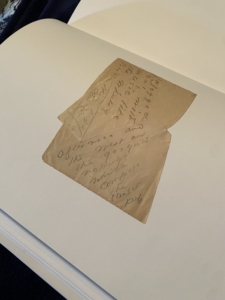
I want to emphasize this: An important feature of Emily Dickinson’s Poems: As She Preserved Them, also edited by Miller, is contained in the subtitle. We can, finally, in a one-volume, reader’s edition, see Dickinson’s fascicles, the little booklets into which she arranged her poems from 1858 to 1865. Dickinson’s variant words, too (see margin notes) are included in this edition.

After these gorgeous new editions sat on my shelf for several months, it occurred to me that I might actually read them.

From there I conceived of a project called “My Year of Reading Dickinson.” Last November, before my year officially began, I told my friend, poet and scholar Jayne Marek, that I had no idea what it should look like. Though I hoped to share the project in some fashion, it felt lumpy and shapeless. Jayne suggested that I just put my boots on and get started. “Read for a few months or the whole year, then decide what it is.”

As you know, this past year a bunch of other stuff took over much space in my haunted brain, but even on the absolute worst days, I have picked up the letters and read a page or two, and I have read at least a few poems—usually more. Because I get up at dark-thirty and my husband rises at 8:00, I had time for this. (More than once I’ve awakened at midnight, realized I hadn’t done my pages, and got out of bed to do so.) I can now report that I’ve finished both volumes, and am circling back to reread and make more notes.

Speaking of that long shelf of books about E. D., I have also tried to keep a biography or critical work going on the side. And I have shared a little. Last winter’s Creative Retirement Institute course on Dickinson, for instance. I will share more, though I’m still not sure what that sharing will look like. Blog posts? A new blog, dedicated to Dickinson? Or will I venture into the Substack world? For now, I’ll be pouring a lot into the class, and mining the discussion for possibilities.

So all that blather, only to circle back to the beginning of the post. I’d love to see you join us for the CRI course. It’s on Zoom and runs 4 Tuesdays, 2 hours per class, beginning November 18. Jump straight to the course from the above link, or check out CRI’s catalog here.