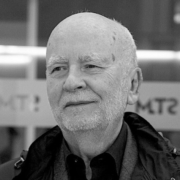
Adam Zagajewski, TRUE LIFE
TRUE LIFE, Adam Zagajewski, trans. Clare Cavanaugh. Farrar, Straus and Giroux, 120 Broadway, New York 10271,  2019, 80 pages, $16 paper, www.fsgbooks.com.
I have been a fan of Adam Zagajewski’s poetry ever since his “Try to Praise the Mutilated World” appeared in the New Yorker the week after 9/11. I bought his selected poems, Without End (2002), some time ago, and on a visit to Phinney Books during this spring’s Independent Bookstore fest, I picked up this slim book of his late poems. It was published in Polish before his death (his dates are 1945-2021), and only recently appeared in this gorgeous translation by Clare Cavanaugh. It is full of delights.
Figs
Figs are sweet, but don’t last long.
They spoil fast in transit,
says the shopkeeper.
Like kisses, adds his wife,
a hunched old woman with bright eyes.—Adam Zagajewski
Each week, I tell myself to 1) read a book of poems, and 2) share a brief appreciation and a poem—easy, peasy, right? So far I’ve been unsuccessful. For this blogpost, I ended up doing a deep dive into all-things Zagajewski (pronounced Zaga yef ski). As people say, “I went down the rabbit hole,” and I have spent most of the day there. Now I’m back, not to drag you down with me, but to point the way for your own exploration.
For one thing, I learned that who Zagajewski was goes beyond the stock, “one of the most beloved poets in the world,” “the acclaimed Polish poet,” as he is usually introduced. Born in Lvov, Poland, as I had previously read, he moved as an infant with his family to Western Poland.
Well, yes, but so much more that that.
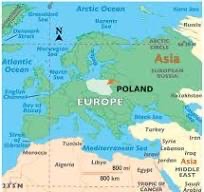
Lvov, Poland, is now Lviv, Ukraine. When the borders of Poland were redrawn after WWII, Zagajewski and his family, along with many other Poles, were forcibly moved (a journey of two weeks, in cattle cars—Adam was four months old) to the German city, Gliwice, which had been ceded to Poland. Given Adam’s tender age, being in exile, being a refugee, may not have marked him as such, but Adam’s forebears were unwilling to cede their geographical identity. Writing a tribute to his friend, Ilya Kaminsky quotes a few passages from Zagajewski’s memoir, Two Cities, and explains the title’s significance:
In Gliwice, Adam’s father, an engineering professor, couldn’t afford a desk. Instead, he nailed four metal food cans to a small table, where he piled book after book about Lvov. For decades, he kept buying maps and guidebooks to the city. As if Lvov existed. As if he could simply return.
–Ilya Kaminsky
I share all of this to explain how another of Zagajewski’s significant poems, “To Go to Lvov,” suddenly bloomed into full-color life for me. (Kaminsky’s essay, “Going to Lvov: A Poet of the Human Soul,” appeared in The Yale Review; it contains this poem and others, and you can find it here: https://yalereview.org/article/going-to-lvov.)
Zagajewski, in his memoir, also writes of walking, as a boy, with his grandfather through the streets of their adopted city. “I walked the streets of Gliwice. He walked the streets of Lvov” (qtd. by Kaminsky). Somehow it seems fitting that in many of the poems in True Life, the poet takes us along on his walks through old European cities, haunted by the past:
Santiago de Compostela
Light drizzles as if the Atlantic
were examining its conscienceNovember no longer pretends
Rain dowsed its bonfires and sparksSantiago is Spain’s secret capital
Patrols arrive day and nightPilgrims wander its streets, exhausted
or eager, like ordinary touristsA woman sat by the cathedral
she leaned on her backpack and sobbedThe pilgrimage is over
Where will she go nowCathedrals are only stones
Stones don’t know motionEvening approaches
and winter.—Adam Zagajewski
I have to emphasize how he employs these strange comparisons, surprising, opaque images:
Light drizzles as if the Atlantic
were examining its conscience
Sometimes even stranger:
When night draws near
the mountains are clear and pure
—like a philosophy student
before exams
(from “Mountains”)
In “Kardamyli” (a town in Greece, given in 146 BC by the Roman emperor to the Spartans), Zagajewski asks, “What can a person who is a poet do— / in the army, a hospital, the world?
My answer: one could do worse than write these poems. As Kaminsky shares:
Adam insisted that a poem can be both an elegy for what happened and also a hymn to life. He gave us, if not a healing, then a way to go on, to give each other a measure of reprieve, music, and gentleness.
—Ilya Kaminsky, “Going to Lvov: A Poet of the Human Soul” (The Yale Review, May 6, 2021)
“[A]n elegy for what happened and also a hymn to life.” Just gorgeous.
You can learn more about Zagajewski, and find videos of him being interviewed or reading, all over the Internet. Obviously, I recommend Kaminsky’s essay. And, if you don’t know his poem, “Try to Praise the Mutiliated World,” please (please) visit this page to find it.
You can also find it at this blogpost from last year: https://www.bethanyareid.com/adam-zagajewski-1945-1921/.

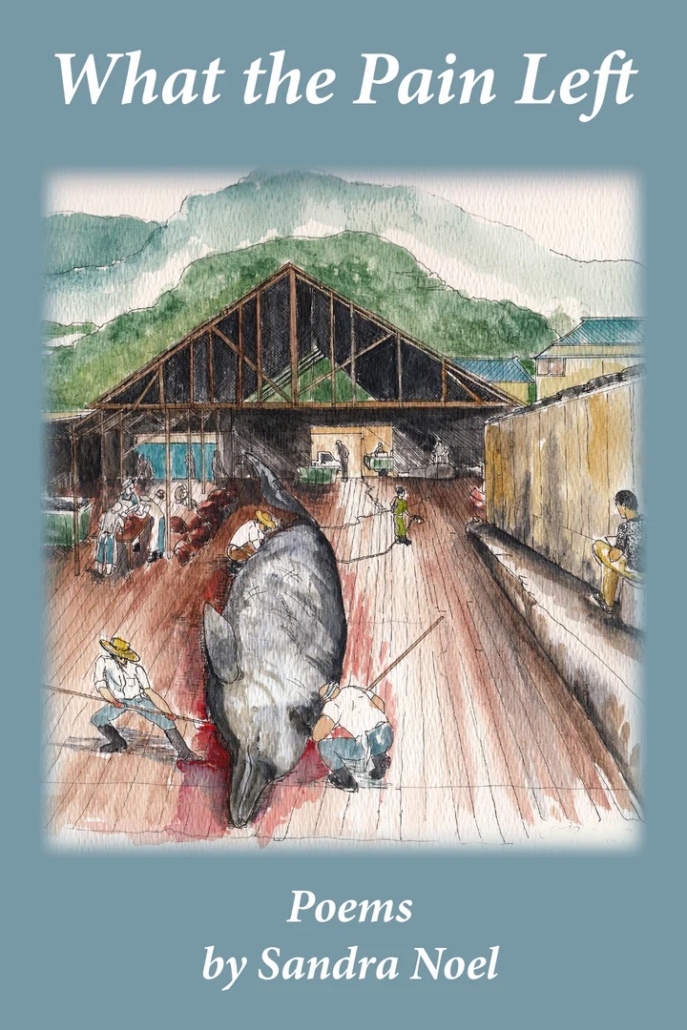 noticed in Noel’s previous books. They are tender with feeling, and accessible; for the most part, Noel omits punctuation, placing together lines about a heron abruptly with “tragedies / float noisily by” (“In the Shadows”). Unexpected capital letters intrude, and exclamation marks. All of which seem to be insisting on making sense of what feels senseless, an illness, ineffectual treatment, and untimely death. This praise from the back cover, felt apt: