

Christine Valters Paintner
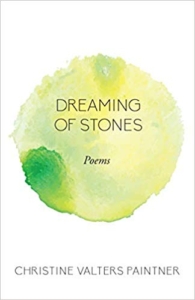 Easter Sunday seems a good day to share a poem from Christine Valters Painter, poet, Benedictine oblate, teacher, mystic, pilgrim. I have a row of her books on my shelf, and highly recommend her workshops and retreats. Last spring her virtual retreat with its emphasis on lectio divine and sacred time saved me from my initial despair over the pandemic. (And I have to admit to getting lost just now in her poetry videos.)
This poem is from Dreaming of Stones (Paraclete Press, 2019). I love how it walks with us from darkness to light, and its series of questions.
“The Duty of Delight”
(after Dorothy Day and John Ruskin)This poem is held together by heartache,
by the sour smell of sorrow hovering,
thick dust and thinned soup,
the old pillowcase keening-damp,
the swift armada of black clouds.Even while I write this,
bodies are burned alive in cages,
put on view for the world to see,
bodies are piled in unmarked pits,
or broken by a terrible hunger.How to remember even the possibility of delight
late one evening after hours of bagging groceries,
the baby crying now, electricity shutting off.
Someone, somewhere is shredded
and scattered by secret wounds.Perhaps this is life’s most exalted and exacting task,
holding the hard edges against the soft wonder,
or seeking the consolation of nature’s indifference.
Even the flame turns to ash,
even the ash is fodder for roses.What can I do but gather constellations in my arms
like sprays of Queen Anne’s Lace?
What can I do but track a creature untamed,
deep into the thick forest?
What can I do except slip open the rusty, lichened gate?What can I do but read poems before breakfast,
and allow my walking to become a fanfare?
My heart beats like a frog on a hot August night,
while the river rushes past like a herd of wild horses,
and I fall off the ragged edges of the map of known things.This poem is held together by joy,
even when standing still
we are always rushing east toward the light,
hopeful to meet the sun again soon
soaring in pink perfection.–Christine Valters Paintner
“What can I do but gather constellations in my arms?”
[Featured Photo by Dan Hamill from Pexels]
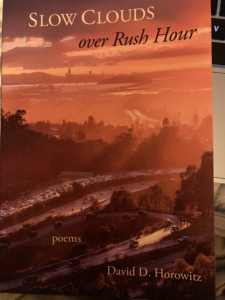 David D. Horowitz, as most Seattle poets know, is
 Consider this my little National Poetry Month party for our current United States Poet Laureate,
 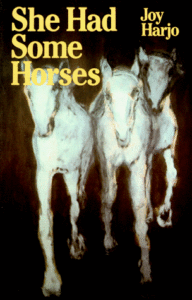 be shared.
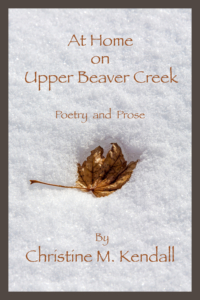 At Home on Upper Beaver Creek (2020) is Christine M. Kendall’s third book (after Talk, A chapbook, 1998, and Resting in the Familiar, 2017). To create her books, Christine seeks coaching and input from her writing group, and has the books professionally designed (by Jack Kienast) and printed (by Norman Green of Threshold Documents). She put together At Home for a show at the Confluence Gallery in Twisp, Washington, for the residents of Upper and Lower Beaver Creek Roads where several artists of the Methow Valley reside.